This article is a short synopsis of some key concepts about porn and your brain. For the science behind it, please follow all the links and read this page. Some links go to our articles, which in turn link to studies. For a more in-depth understanding and further evidence see The Research Page. For specific content explore Porn FAQs.
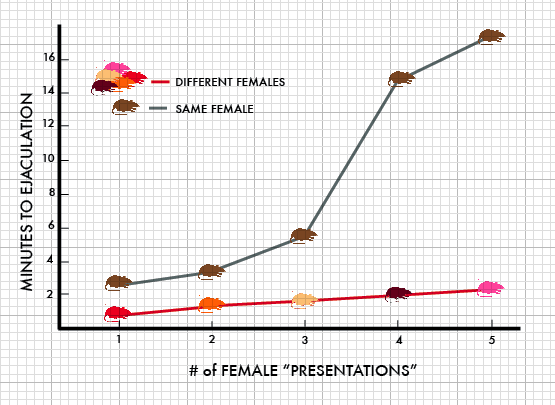
What happens when you drop a male rat into a cage with a receptive female rat? First, you see a frenzy of copulation. Then, progressively, the male tires of that particular female. Even if she wants more, he has had enough. However, replace the original female with a fresh one, and the male immediately revives and gallantly struggles to fertilize her. You can repeat this process with fresh females until he is completely wiped out.
This is called the Coolidge effect—the automatic response to novel mates. Interestingly, men ejaculate more motile sperm and they do it more quickly when they view a novel porn star. This powerful automatic response to erotic novelty is what started you down the road to getting hooked on internet porn.
Like that lab rat, you have a primitive mechanism in your brain urging you to fertilize the two-dimensional females, males (or whatever) on your screen. (Note: The Coolidge effect also occurs in females. Studies show that, when given the opportunity, hunter-gatherer females are no less promiscuous than males.)
Primitive circuits in your brain govern emotions, drives, impulses, and subconscious decision-making. They do their jobs so efficiently that evolution hasn’t seen the need to change them much since before humans were humans.
More dopamine, please
For you, rats, and all mammals, the desire and motivation to pursue sex arise largely from a neurochemical called dopamine. Dopamine amps up the centerpiece of the primitive part of the brain—the reward system. It’s where we experience cravings and pleasure, and where we get addicted.
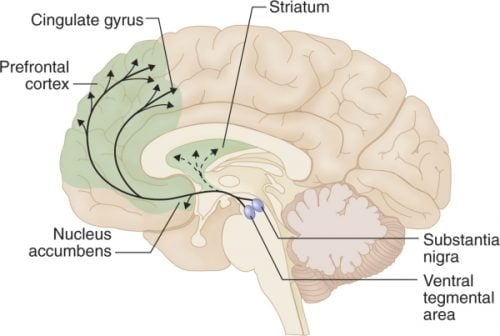
The ancient reward circuitry compels you to do things that further your survival and pass on your genes. At the top of our human reward list are food, sex, love, friendship, and novelty. These are called ‘natural reinforcers,’ as contrasted with addictive chemicals.
The evolutionary purpose of dopamine is to motivate you to do what serves your genes. The bigger the squirt, the more you want something. No dopamine and you just ignore it. Chocolate cake and ice cream—a big blast. Celery—not so much. Sexual stimulation offers the biggest natural blast of dopamine available to your reward circuitry. One of dopamine’s nicknames is the “molecule of addiction” because it plays a central role in all addictions.
Dopamine
Although dopamine is often referred to as a “pleasure molecule,” this is not technically accurate. Dopamine is mostly about seeking and searching for rewards, the anticipation, the wanting. Dopamine provides the motivation and drive to pursue potential rewards or long term goals. Although controversial and far from settled, the final “reward” or good feelings arise largely from opioids (and cannabinoids). Put simply – dopamine is wanting, opioids are liking.
As psychologist Susan Weinschenk explained, the neurotransmitter dopamine does not cause people to experience pleasure, but rather causes a seeking behavior. “Dopamine causes us to want, desire, seek out, and search,” she wrote. It is the opioid system that causes one to feel pleasure. Yet, “the dopamine system is stronger than the opioid system,” she explained. “We seek more than we are satisfied.” Addiction may be thought of as wanting run amok.
Novelty, novelty, more novelty
Dopamine surges for novelty. A new car, just-released movie, the latest gadget…we are all pursuing hits of dopamine. As with everything new the thrill fades away as dopamine plummets.
Here’s how the Coolidge effect works: The rat’s reward circuitry is squirting less and less dopamine with respect to the current female, but produces a big dopamine surge for a new female. Does that sound familiar?
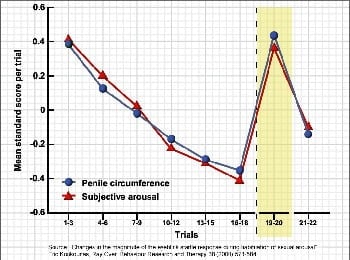
Not surprisingly, rats and humans aren’t that different when it comes to response to novel sexual stimuli. For example, when Australian researchers (graph) displayed the same erotic film repeatedly, test subjects’ penises and subjective reports both revealed a progressive decrease in sexual arousal. The “same old same old” just gets boring. Habituation indicates declining dopamine.
After 18 viewings—just as the test subjects were nodding off—researchers introduced novel erotica for the 19th and 20th viewings. Bingo! The subjects and their penises sprang to attention. (Yes, women showed similar effects.)
Clicking for novelty
Internet porn is especially enticing to the reward circuitry because novelty is always just a click away. It could be a novel “mate,” unusual scene, strange sexual act, or—you fill in the blank. With multiple tabs open and clicking for hours, you can experience more novel sex partners every ten minutes than our hunter-gatherer ancestors experienced in a lifetime. Research confirms that anticipation of reward and novelty amplify one another to increase excitement and rewire the limbic brain. Internet porn is what scientists call a supernormal stimulus. These are stimuli that are exaggerated (perhaps synthetic) versions of normal stimuli, which we falsely perceive as extraordinarily valuable.
Supernormal Stimulus
It was Nobel laureate Nikolaas Tinbergen who years ago coined the term supernormal stimulus (or supranormal). He discovered that birds, butterflies, and other animals could be duped into preferring fake eggs and mates. Female birds, for example, struggled to sit on Tinbergen’s larger-than life, vividly spotted plaster eggs while their own pale, dappled eggs perished untended.

Humans, like the birds, appraise the value of a stimulus via reward circuit activation. This is why sexual excitement releases the highest levels of dopamine and opioids – reproduction is Job One for your genes.
With internet porn, it’s not just the unending sexual novelty that buzzes our reward system. Dopamine fires up for other emotions and stimuli too, all of which often feature prominently when using internet porn:
- Strong emotions – such as guilt, disgust, embarrassment, anxiety & fear
- Seeking and searching – the reward circuit is often called the seeking circuit
- Anything that violates expectations – shock, surprise, or more than we could have imagined
Powerful novelty
Erotic words and pictures have been around a long time. So has the neurochemical rush from novel mates. Yet the novelty of a once-a-month Playboy evaporates as soon as you turn the pages. Would anyone call Playboy or softcore videos “shocking” or “anxiety-producing?” Would either violate the expectations of a computer-literate boy over the age of 12? Neither compares with the “searching and seeking” of a multiple-tab Google porn prowl. What makes internet porn unique is that you can keep your dopamine jacked up with the click of a mouse or tap on a screen.
Many of these same emotional states (anxiety, shame, shock, surprise) not only elevate dopamine, but each can also boost stress hormones & neurotransmitters (norepinephrine, epinephrine, cortisol). These stress neurochemicals increase excitement while amplifying dopamine’s already powerful effects. Over time a porn user’s brain can mistake feelings of anxiety or fear for feelings of sexual arousal. This helps explain why some porn users escalate into ever more shocking or anxiety invoking porn – as they need that extra neurochemical jolt just to become sexually aroused, or to orgasm.
What makes internet porn a unique stimulus?
It’s evident that today’s porn is easy to access, available 24/7, free and private. It affords unlimited novelty. The way it’s used commonly keeps dopamine elevated for abnormally long periods, making internet porn uniquely compelling, and potentially addictive. Those who agree that porn addiction exists often compare internet porn to addictive drugs or video-games. While behavioral and substance addictions share certain brain changes, such analogies fail to address the elephant in the room: we possess brain circuits for sex, and these circuits are particularly vulnerable during adolescence (and somewhat vulnerable for as long as we live).
To say it another way, there are no innate circuits for alcohol, cocaine, or first-person shooter. While all can elevate reward center dopamine (requisite for addiction-related brain changes), none has the power to shape our sexual arousal template. Internet porn can alter or sculpt our extensive brain circuitry for sexuality and reproduction – especially during adolescence when the brain is highly malleable and programed to learn all about its sexual environment (in order to successfully reproduce).
The power of orgasm
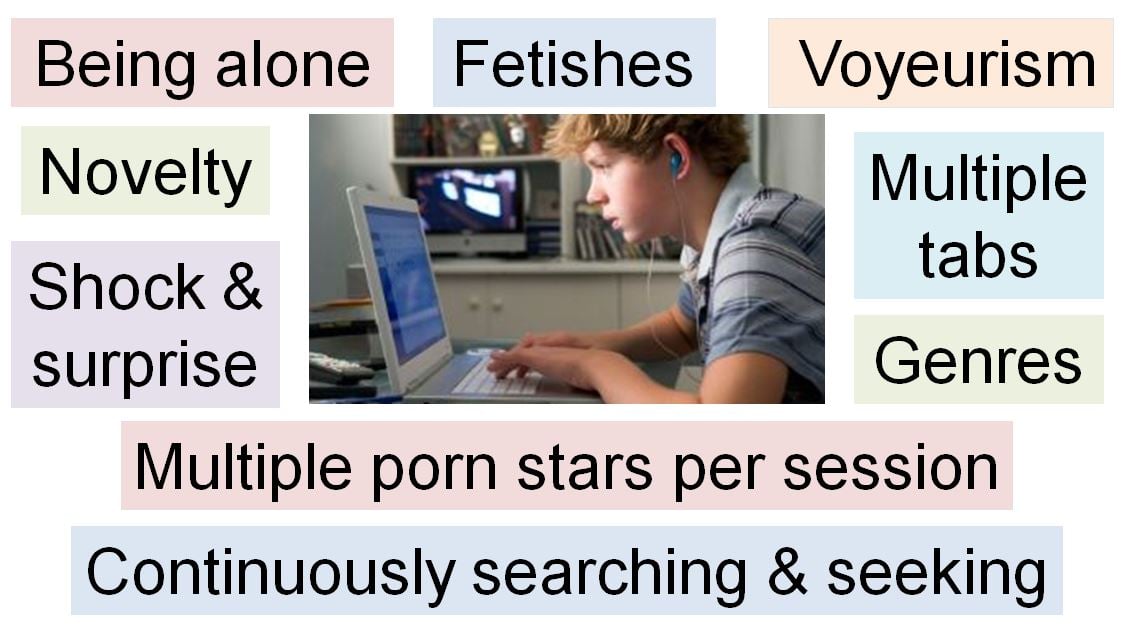
Since orgasm is our most powerful natural reinforcer, and reproduction our genes’ top job, our brain tries to remember everything associated with this powerful experience. It does this by linking associations to The Big Event (climax). In the case of porn use would include: voyeurism, searching/seeking and endless novelty. It can also include fetishes, multiple porn stars, multiple tabs, strange acts, shock, surprise, anxiety, etc.
(Note: We don’t address the psychological impact on young people of escalating to hardcore porn of every type imaginable and unimaginable, while highly aroused – something our ancestors couldn’t do.)
Other qualities that set internet porn apart from other potentially addictive substances and behaviors:
- Studies reveal that video porn is far more arousing than static porn.
- To increase sexual arousal (and raise declining dopamine) one can instantly switch genres during a masturbation session. Couldn’t do that before 2006 and the arrival of streaming tube sites.
- Unlike photos of naked people, videos replace your imagination, and may shape your sexual tastes, behavior, or trajectory (especially so for adolescents).
- Porn is stored in your brain, which allows you to recall it anytime you need a “hit.”
- For food and drugs there is a physical limit to consumption. However, there are no physical limitations to internet porn consumption. The brain’s natural satiation mechanisms are not activated, unless one climaxes. Even then, the user can click to something more exciting to become aroused again.
- With food and drugs one can only escalate (a marker of an addiction process) by consuming more. With internet porn one can escalate both with more novel “partners” and by viewing new and unusual genres. It’s quite common for a porn user to move to evermore extreme porn. A user can also escalate by viewing compilation videos or by using VR porn.
- The age users start watching erotica matters. A teen’s brain is at its peak of dopamine production and neuroplasticity, making it highly vulnerable to addiction and sexual conditioning. Adolescent animals produce higher levels of DeltaFosB in response to drugs and natural rewards.
Sexual arousal and addictive drugs share similar brain mechanisms
Sexual arousal and addictive drugs activate the exact same reward circuit nerve cells. In contrast, there’s only a small percentage of nerve-cell activation overlap betwe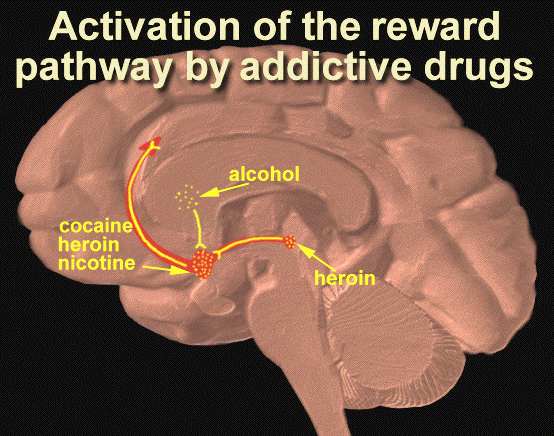 en addictive drugs and other natural rewards such as food or water. Turning on the same nerve cells that make sexual stimulation so compelling helps explain why meth, cocaine, and heroin can be so addictive.
Interestingly, heroin addicts often claim that shooting up “feels like an orgasm”. Supporting their experience, ejaculation mimics the effects of heroin addiction on the same reward circuit nerve cells. Specifically, ejaculation shrinks the same dopamine producing nerve cells that shrink with chronic heroin use. This doesn’t mean sex is bad. It simply informs us that addictive drugs hijack the exact same mechanisms that urge us back into the bedroom.
Reward center changes
Unlike other non-drug rewards (yummy food or sugar), but similar to drugs of abuse, sexual experience leads to a long-lasting changes in the numbers and types of reward center glutamate receptors. Glutamate is the main neurotransmitter relaying information from key brain regions to the reward center. These neuroadaptations make the reward center far more sensitive to sights, sounds, thoughts or memories associated potential sexual activity.
In addition, both sex and drug use lead to the accumulation of DeltaFosB, a protein that activates genes involved with addiction. The molecular changes it generates are nearly identical for both sexual conditioning and chronic use of drugs. Whether it’s sex or drugs of abuse, high levels of DeltaFosB rewire the brain to crave “IT”, whatever “IT” is. Addictive drugs not only hijack the precise nerve cells activated during sexual arousal, they co-opt the same learning mechanisms that evolved to make us desire sexual activity.
Moreover, reward center dopamine levels for sexual arousal rival those seen with addictive drugs such as morphine, alcohol & nicotine (far higher than any other natural reward). High dopamine and opioid levels are one of reasons we can tell the difference between eating an apple and having a mind-blowing orgasm.
Is internet porn addictive?
Thus, familiar talking points such as this actual comment fall apart: “Well, lots of activities raise dopamine, so internet porn is no more addictive than watching sunsets or playing golf.” That’s a quote from an academic sexologist (with a very superficial understanding). Similarly, in sexologist Marty Klein’s reply to a Zimbardo & Wilson article he claimed that the brain response to watching porn is no different than watching a sunset:
“Besides, our brain responds in this same observable way when we cuddle a grandchild or enjoy a sunset.”
 The Klein claim was long ago tested and debunked, in a 2000 fMRI study: “Cue-induced cocaine craving: neuroanatomical specificity for drug users and drug stimuli. The study had cocaine addicts and healthy controls view films of: 1) individuals smoking crack cocaine, 2) outdoor nature scenes, and 3) explicit sexual content. The results: cocaine addicts had nearly identical brain activation patterns when viewing porn and viewing cues related to their addiction. (Incidentally, both cocaine addicts and healthy controls had the same brain activation patterns for porn.) However, for both the addicts and controls, brain activation patterns when viewing nature scenes were completely different from the patterns when viewing for porn. Goodbye silly talking point!
The important take-away concept is that drugs can activate the “sex” neurons and trigger a buzz without actual sex. So can internet porn. Golf and sunsets cannot. For that matter, nor can good old rock & roll.
Addiction is not required for either porn-induced brain changes or negative effects
OK you get it: Internet porn is a unique supernormal stimulus and a “dopamine-producing machine.” The usual question is:
“What are the possible consequences of all this dopamine?”
However, the more accurate question is:
“What are the possible consequences all this dopamine in response to one combo of stimuli? (in this case internet porn and a computer screen).”
While the consequences are many, the following brain changes play a central role in the myriad symptoms and conditions seen:
1) Sexual conditioning
This manifests in two general ways:
- One type of sexual conditioning can be summed up as – “This how people have sex, and this is how I should do it.” Most research & popular articles focus on this type of sexual conditioning, especially in adolescents. Although extraordinarily important, YBOP focuses on the second type of sexual conditioning.
- A second type can be summed as – “This is what turns me on.” This deeper, more ingrained form of learning might include: watching porn being more exciting than real sex, or needing to click from video to video to stay sexually aroused, or the never-ending list of porn-induced fetishes users report.
2) Addiction-related brain changes
These come in many forms. These complex brain changes are on spectrum and can occur without developing a full-blown addiction (as in this study on porn users).
Here’s an important concept: Both sexual conditioning and addiction share the same key brain change, occurring in the same structure, which is initiated by the same biological signal.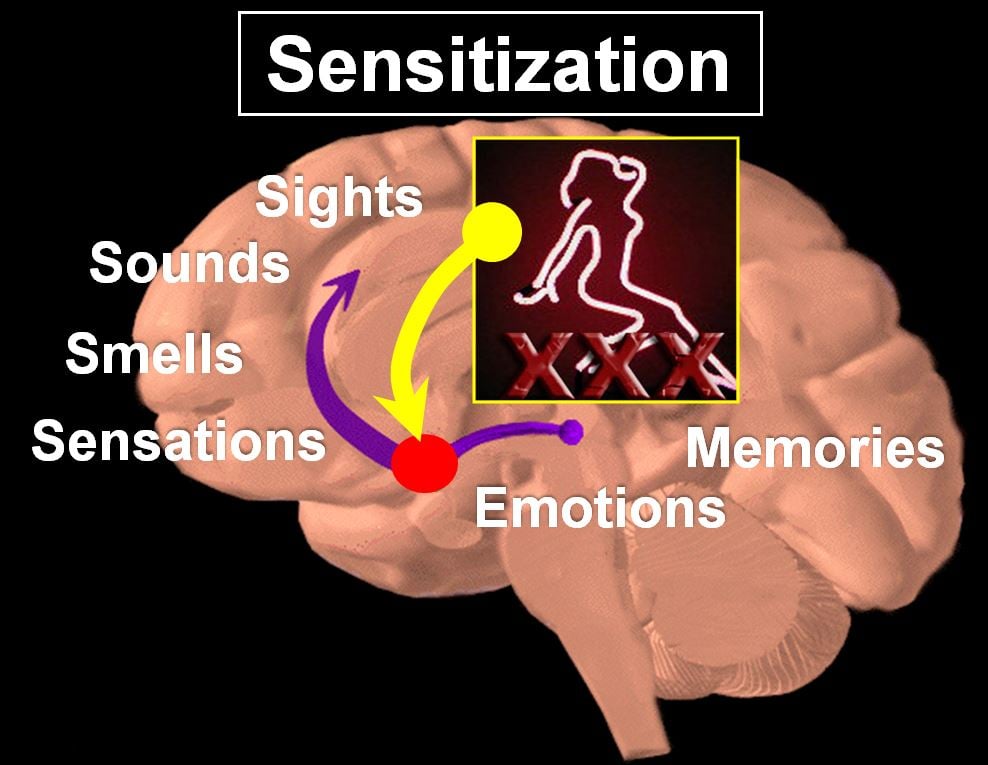
- The brain change is called ‘sensitization’ (but full blown addiction involves additional brain changes as well)
- This structure is the reward center (nucleus accumbens).
- The primary signal, is of course, dopamine.
Sensitization occurs when the brain wires together the sights, sounds, smells, sensations, emotions, and memories associated with a big reward, such as masturbating to porn – creating a pathway that can blast our reward center in the future. When activated by cues or triggers, this pathway creates powerful, hard to ignore, cravings.
Bingeing on drugs or natural rewards (porn, junk food) induces high levels of dopamine, which your primitive brain interprets as: “This activity is really, really valuable – and you should do it again and again.” Of course, nothing’s more important to your primitive brain than spreading your genes – even if your higher brain realizes it’s just a screen. Dopamine helps us remember and repeat what (it assumes) furthers our genes’ survival. It accomplishes this through rewiring the brain.
Your hijacked binge mechanism: Dopamine induces DeltaFosB
A “binge mechanism” is an evolutionary advantage in situations where survival is furthered by overriding normal satiety. Think of wolves, which need to stow away up to twenty pounds of a single kill at one go. Or our ancestors, who needed to store high-quality calories as a few extra pounds for easy transport to survive hard times. Or mating season, when there’s a harem to impregnate. In the past, such opportunities were rare and passed quickly. (Update: compulsive eating circuit found.)
Our environments have drastically changed. The Internet offers endless mating opportunities, which your primitive brain perceives as real because you find them so arousing. As any good mammal would, you automatically attempt 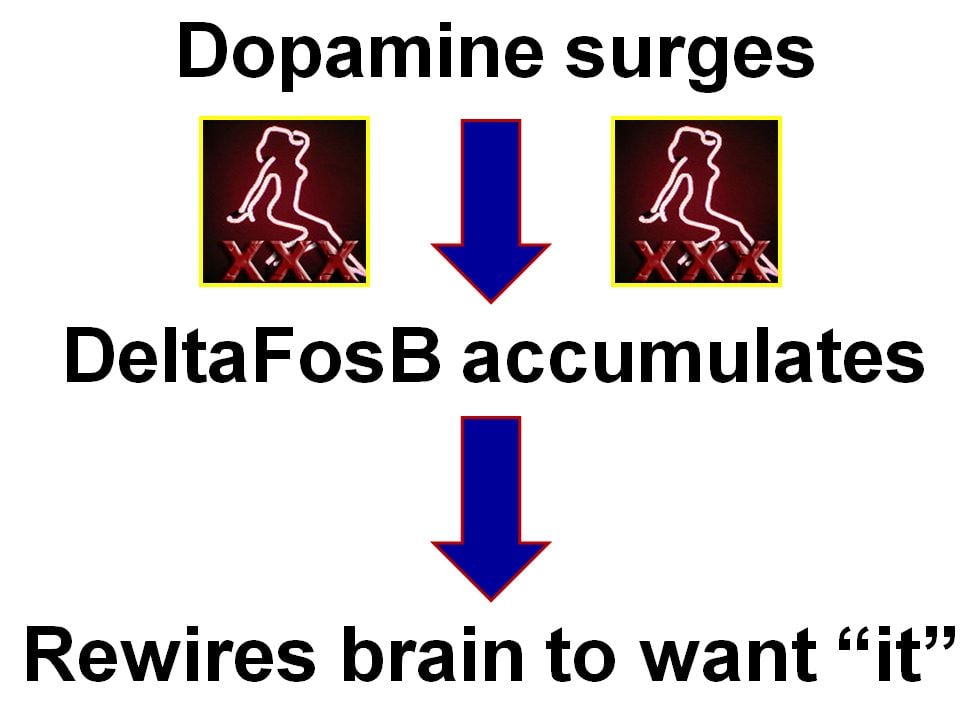 to spread your genes far and wide, but there’s no end to your mating season.
Click, click, click, masturbate, click, click, click, masturbate, click, click, click. Day in and day out, never giving your brain a well deserved rest. This can kick your binge mechanism into overdrive. Evolution hasn’t prepared your primitive brain for this kind of nonstop stimulation.
Evolutionary Jackpot
Excess consumption (food or sex) is the signal to your primitive brain that you have hit the evolutionary jackpot. With continued daily over-consumption, high levels of dopamine trigger the production of the protein DeltaFosB. Continued over-consumption of natural rewards (sex, sugar, high-fat, aerobic exercise) or chronic administration of virtually any drug of abuse causes DeltaFosB to slowly accumulate in the reward circuitry. DeltaFosB activates certain genes which initiate several brain changes, including sensitization.
Chronic overconsumption → Dopamine → DeltaFosB → Sensitization
It’s important to understand that addictive drugs only cause addiction because they magnify or inhibit mechanisms already in place for natural rewards. One of DeltaFosB’s evolutionary purposes is to motivate us to “get it while the getting is good!” It’s a binge mechanism for food and reproduction, which worked well in other times and environments. With the advent of supernormal versions of natural rewards, however, it makes addictions to junk food and internet porn as easy as 1-2-3. 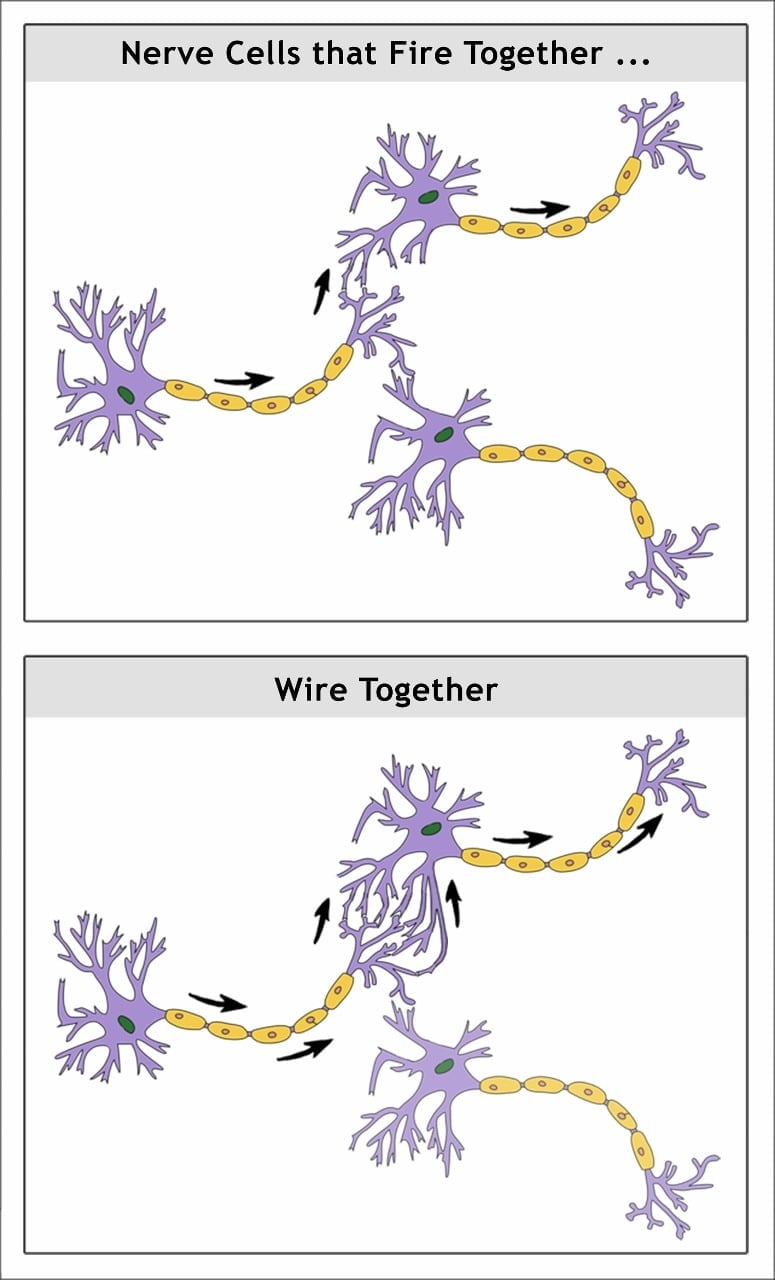
Sensitization: A Pavlovian super-memory is formed
Learning, memory, and habits can be summed up in the old, but true, saying – “Nerve cells that fire together, wire together.”
The rewiring behind addiction arises partly from DeltaFosB, which strengthens the connections between nerve cells, making it easier for them to communicate. While DeltaFosB acts on the reward circuit, stronger nerve connections are behind all learning. This process is called neuroplasticity. The more intense the experience, the stronger the connections. The stronger the connections, the easier it is for electrical impulses to travel along this new pathway.
If habitual porn viewing has caused addiction-related brain changes, you have forged a rut in your brain. Just as water flows through the path of least resistance, so do impulses, and thus thoughts. As with any skill, the more you practice the easier it is do. Soon it becomes automatic, without any conscious thought. You’ve formed a deep pornography rut in your brain called a sensitized neural pathway.
Pavlovian conditioning
Sensitized pathways can be thought of as Pavlovian conditioning on turbos. When activated by thoughts or triggers, sensitized pathways blast the reward circuit, firing up hard-to-ignore cravings. Several recent brain studies on porn users assessed sensitization, and all reported the same brain response as seen in alcoholics and drug addicts (about 25 studies have reported sensitization in porn users/sex addicts)
DeltaFosB slowly degrades, and is back to normal levels about 2 months after an addict last uses. Even though DeltaFosB is no longer present, the sensitized pathways remain, perhaps for a lifetime. Remember, the purpose of DeltaFosB is to promote the rewiring of the brain, so that you will experience a bigger blast from whatever you have been overconsuming. This memory, or deeply ingrained learning, lingers long after the event. Addiction isn’t really damage – it’s primarily pathological learning.
When does one cross the line?
Many ask the obvious question: “How much is too much?” This question presumes that porn’s effects are binary. That is, you either have no problem, or you are a porn addict. However, porn-induced brain changes occur on a spectrum and cannot be classified as black and white, either/or. Asking where one crosses the line ignores the principle of neuroplasticity: the brain is always learning, changing and adapting in response to the environment. 
Studies reveal that even a small amount of supernormal stimulation can rapidly alter the brain and change behavior.
For example, it took only 5 days to induce marked sensitization to video games in healthy young adults. The gamers weren’t addicted, but elevated brain activity aligned with subjective cravings to play. In another experiment, nearly all the rats given unrestricted access to “cafeteria food” binged to obesity. It took only few days of junk food gorging for the rats’ dopamine receptors to decline (reducing their satisfaction). Less satisfaction drove the rats to binge even more.
More porn has more impact
As for Internet porn, this German study on men not addicted to porn found addiction-related brain changes and less brain activation to porn correlating with more porn consumed. An Italian study found that 16% of high school seniors who consumed porn more than once a week experienced abnormally low sexual desire. Compare that to 0% of non-porn users reporting low sexual desire. Moreover, every study involving males (over 70 studies) has reported more porn use linked to poorer sexual or relationship satisfaction. The take away is that addiction is not required for either significant brain changes or negative effects.
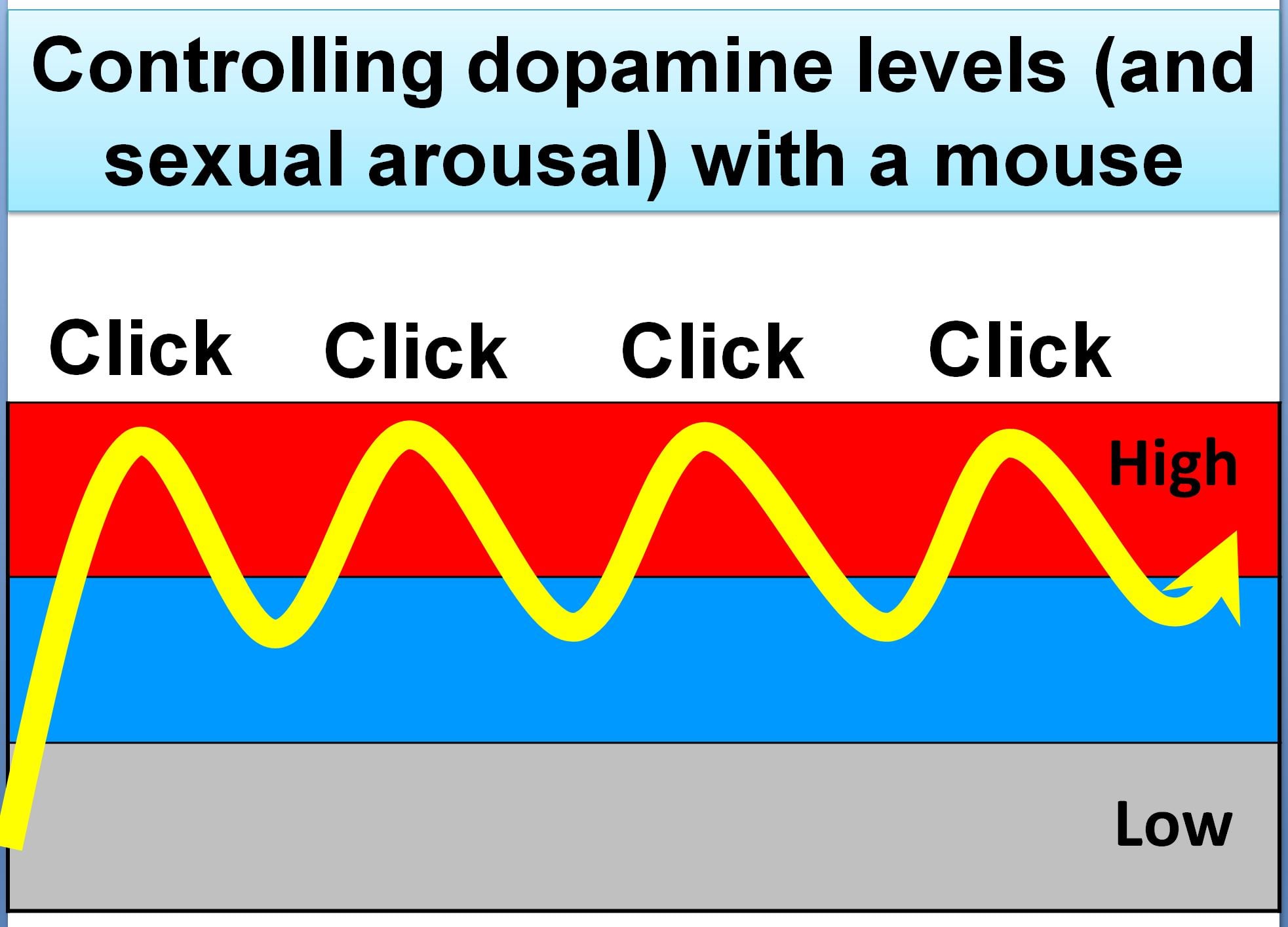 Put simply, sexual conditioning, sensitization, or other addiction-related brain changes, occur on a spectrum. Also realize that our brain is constantly learning and adapting to the environment. Internet porn, being a supernormal stimulus targeting innate sexual circuits, shapes the brain and alters perception.
This is why posing such questions as ““What is the definition of porn?” or “How much porn use constitutes an addiction?” are misleading and irrelevant. The former is like asking whether it’s slot machines or blackjack that leads to a gambling addiction. The latter is like asking a food addict how many minutes she spends eating.
The reward center (nucleus accumbens) doesn’t know what “porn” is. It only registers levels of stimulation through dopamine spikes. This is physiology, not morality or sexual politics.
Drug addictions aren’t the only addictions
It’s common knowledge that dopamine-raising substances, such as alcohol or cocaine, can create addictions. Yet only about 10-20% of humans or animals that use addictive drugs (except nicotine) ever become addicts. Does this mean the rest of us are safe from drug addiction? Perhaps. When it comes to substance abuse, both genetics and childhood stress play significant roles.
Yet when it comes to unrestricted access to super-stimulating versions of natural rewards, such as junk food, or even video games, the answer is no, although certainly not every user gets hooked.
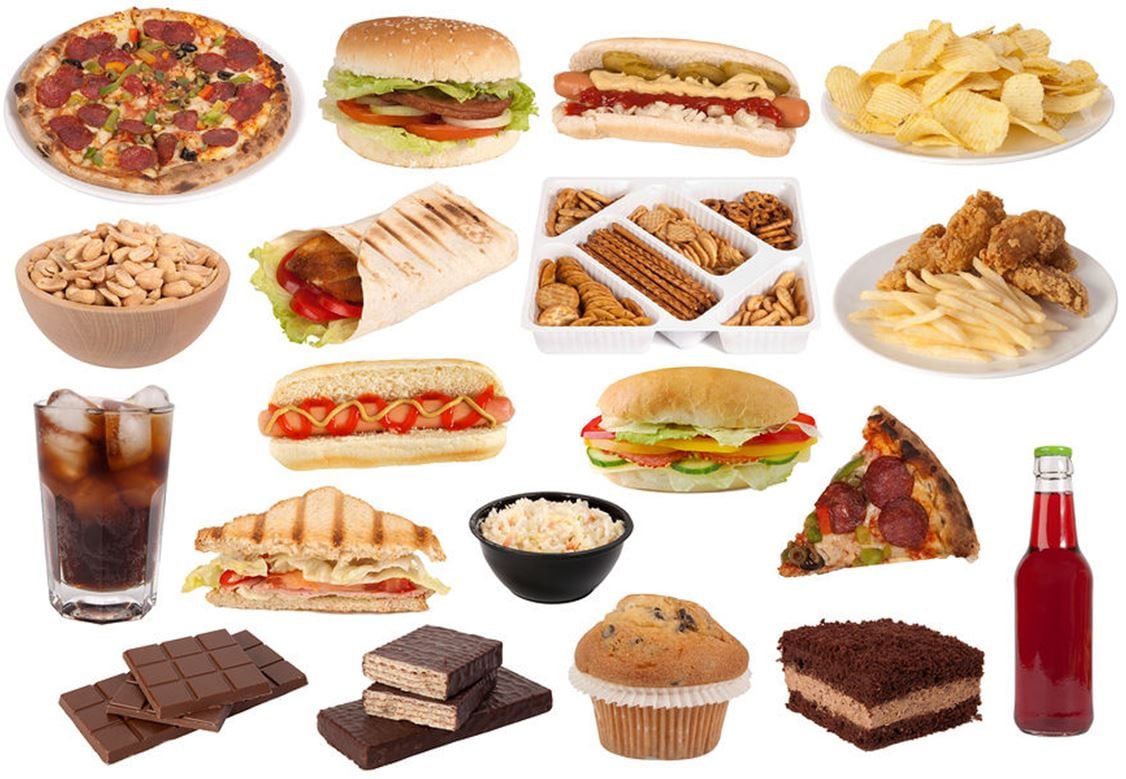 Several animal studies have shown that junk food is more addictive than cocaine, (rats prefer sugar to cocaine) and that overeating to obesity can bring about addiction-related brain changes. In fact, when rats are given unlimited access to “cafeteria food,” nearly 100% binge to obesity. The obese rats’ brains and behaviors mirror those of drug addicts. These same rats don’t overeat on regular rat chow, just as hunter-gathers don’t get fat on their native diets.
The power of sugar and fat
This helps explain why 39% of adult Americans are obese and 75% or more are overweight, even though none of them want to be. With our brain’s reward circuit lighting up, we can easily slam down 1500 calories in burgers, fries and milkshakes. Try slamming down 1500 calories of dried chewy venison and boiled roots in one sitting (or in one day).
Today’s high fat/sugar foods and internet porn (you’re reading this) have the potential to hook even more people than do drugs. These supernormal versions of natural rewards can override our brain’s satiation mechanisms—the “I’m done” feeling—because concentrated calories and fertilization opportunities are your genes’ top priorities. The reason highly stimulating versions of food and sex can hook us—even if we’re not otherwise susceptible to addiction—is that our reward circuitry evolved to drive us toward food and sex, not drugs.
To say this another way, there are no innate circuits for seeking heroin, alcohol, or cocaine. Yet there are various brain circuits devoted to seeking out and consuming both food and sex. And, while we like a good meal, sexual arousal and orgasm release the highest levels of rewarding neurochemicals (dopamine and opioids). That’s as it should be: reproduction is our genes’ #1 job.
Behavioral & chemical addiction share many of the same fundamental mechanisms & brain changes
Recent research reveals that behavioral addictions (food addiction, pathological gambling, video gaming, Internet addiction and porn addiction) and substance addictions share many of the same fundamental mechanisms leading to a collection of shared alterations in brain anatomy and chemistry.
This is not surprising as drugs can only enhance or inhibit existing physiological functions. The specific way a drug alters cellular function is called its “mechanism of action”. All drugs and behaviors that can potentially cause addiction share one important mechanism of action: elevation of dopamine in the nucleus accumbens (also called the reward center).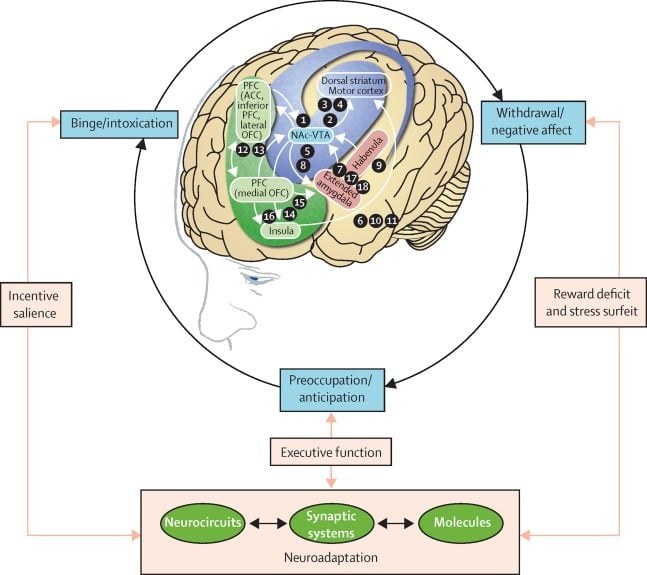
Addiction-related brain changes include:
In simple, and very broad, terms the major fundamental addiction-caused brain changes are: 1) Sensitization, 2) Desensitization, 3) Dysfunctional prefrontal circuits (hypofrontality), 4) Dysfunctional stress circuits. All 4 of these brain changes have been identified among the over 3 dozen neuroscience-based studies on frequent porn users & sex addicts:
1. Sensitization (cue-reactivity & cravings)
Brain circuits involved in motivation and reward seeking become hyper-sensitive to memories or cues related to the addictive behavior. This results in increased “wanting” or craving while liking or pleasure diminishes. Cues, such as turning on the computer, seeing a pop-up, or being alone, trigger intense cravings for porn. These are hard to ignore. Some describe a sensitized porn response as ‘entering a tunnel that has only one escape: porn’. Maybe you feel a rush, rapid heartbeat, even trembling. All you can think about is logging onto your favorite site. Studies reporting sensitization or cue-reactivity in porn users/sex addicts: 1, 2, 3, 4, 5, 6, 7, 8, 9, 10, 11, 12, 13, 14, 15, 16, 17, 18, 19, 20, 21, 22 , 23, 24, 25, 26, 27, 28.
2. Desensitization (decreased reward sensitivity & tolerance)
This involves long-term chemical and structural changes that leave the individual less sensitive to pleasure. Desensitization often manifests as tolerance, which is the need for a higher dose or greater stimulation to achieve the same response. Some porn users spend more time online, prolonging sessions through edging, watching when not masturbating, or searching for the perfect video to end with. Desensitization can also take the form of escalating to new genres, sometimes harder and stranger, or even disturbing. This is because shock, surprise or anxiety can all elevate dopamine and waning sexual arousal. Some studies use the term “habituation” – which may involve learning mechanisms or addiction mechanisms. Studies reporting desensitization or habituation in porn users/sex addicts: 1, 2, 3, 4, 5, 6, 7.
3. Dysfunctional prefrontal circuits (weakened willpower + hyper-reactivity to cues)
Dysfunctional prefrontal cortex functioning or alterations in the connections between the reward system and the prefrontal cortex lead to reduced impulse control, yet greater cravings to use. These dysfunctional prefrontal circuits manifest as the feeling that two parts of your brain are engaged in a tug-of-war. The sensitized addiction pathways are screaming ‘Yes!’ while your ‘higher brain’ is saying, ‘No, not again!’ While the executive-control portions of your brain are in a weakened condition the addiction pathways usually win. Studies reporting poorer executive functioning (hypofrontality) or altered prefrontal activity in porn users/sex addicts: 1, 2, 3, 4, 5, 6, 7, 8, 9, 10, 11, 12, 13, 14, 15, 16, 17, 18, 19.
4. Malfunctional stress system (greater cravings & withdrawal symptoms)
Some addiction experts view addiction a stress disorder, as chronic use induces multiple alterations in the brain’s stress system, and also affect circulating stress hormones (cortisol and adrenaline). A malfunctioning stress system results in even minor stress leading to cravings and relapse because it activates powerful sensitized pathways. In addition, quitting an addiction activates the brain’s stress systems leading to many of withdrawal symptoms common to all addictions, including anxiety, depression, insomnia, irritability and mood swings. Finally, an over-active stress response inhibits the prefrontal cortex and executive functions, including impulse control and the ability fully comprehend the consequences of our actions. Studies indicating a dysfunctional stress system in porn users/sex addicts: 1, 2, 3, 4, 5.
Are these the only brain changes? No. Each of these broad-brush indicators reflects multiple subtler addiction-related cellular and chemical alterations—just as the scan of a cancer tumor wouldn’t show associated subtler cellular/chemical changes. Most of the subtler changes can’t be assessed in human models due to the invasiveness of the technologies required. However, they have been identified in animal models. See this review describing brain changes in both drug and behavior addictions: Natural Rewards, Neuroplasticity, and Non-Drug Addictions (2011)
More pleasure seeking leads to less pleasure (desensitization)
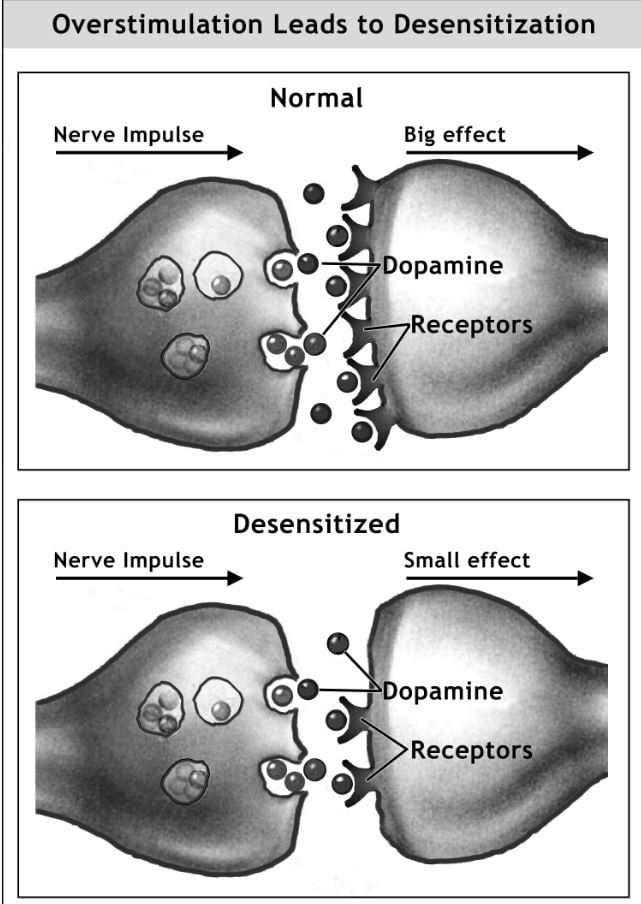 As sensitization and cravings compel you to use porn, overstimulation of the reward circuitry leads to a localized rebellion. The nerve cells bombarded by dopamine say “enough is enough.” If someone continues to scream, you cover your ears. When dopamine-sending nerve cells keep pumping out dopamine, the receiving nerve cells cover their “ears” by reducing dopamine (D2) receptors. To make matters worse, D2 receptors help put the brakes on over-consumption, so their loss means cravings are harder to resist. Desensitization also involves a decline in both dopamine and opioids. Finally, a 2014 brain scan study on porn users found that greater porn use was associated with greater desensitization (loss of reward circuit grey matter, less sexual arousal).
The cycle of desensitization mimics other addictions:
bingeing→ cravings→ numbed pleasure response→ cravings→ bingeing escalates→ further decline in dopamine, opioids and their receptors→ further desensitization…
And soon you are hooked on porn, because nothing else is anywhere near as interesting to your brain. From your genes’ perspective, it’s the perfect design—to keep you fertilizing frantically—before this “valuable mating opportunity” slips away.
Desensitization versus sensitization
Desensitization numbs you to everyday pleasures, while sensitization makes your brain hyper-reactive to anything associated with your porn addiction. Over time, this dual-edged mechanism can have your reward circuitry buzzing at the hint of porn use, but less than enthused when presented with the real deal. Desensitization is not “damage.” Your nerve cells could rebuild lost dopamine or opioid receptors in a flash. Rather, desensitization represents a negative feedback system in overdrive (probably maintained by epigenetic changes).
If these two neuroplastic changes could speak, desensitization would be moaning, “I can’t get no satisfaction” . It is all about low dopamine signaling. At the same time sensitization would be poking you in the ribs and saying, “Hey buddy, I got just what you need,” which happens to be the very thing that caused the desensitization.
A numbed pleasure response (desensitization), combined with a deep brain pathway leading to cravings and short-term relief (sensitization), is what drives most addictions.
Escalation and rewiring
Developing tolerance (numbed pleasure response) means an addict needs more of his/her “drug” to get the same effect. Heavy porn users sometimes notice that as tolerance builds for their earlier tastes, they move in new directions in their search for intense arousal. Many seek out what shocks them—perhaps because “forbidden” and “fear-producing,” plus sexual arousal, offer a bigger brain-chemical kick…at least for a time.
So, it’s not unusual to start out your porn career with an image of a famous hottie’s fine butt. And some months later find you have “progressed” to girls with goats or violent rape scenes. Keep in mind  that that when an addict escalates to new genres or logs more hours of use in search of satisfaction, he is driven by desensitization. His fundamental sexual orientation has not changed.
Escalation brain changes
At last scientists are beginning to catch up with the experience of today’s porn users. This 2016 Belgian study found that half of the men surveyed had escalated to material they previous found “uninteresting or disgusting.” What changes in the brain underlie such widespread escalation? In 2014, a Cambridge team using brain scans reported that problematic porn users habituated to images more quickly than controls and were more attentive to novelty. Interestingly, they were no more prone to sensation-seeking than controls, which suggests their porn use may have been the key variable.
Bottom line: the more intense the associated events (orgasm + video), or the more they are repeated, the stronger the wiring. Each experience wires the new tastes into the brain. If your sexual tastes have changed so has your brain. To date, over 45 studies have reported findings consistent with escalation (tolerance) or habituation to current porn.
Assessing addiction
Some still believe that only chemicals, not behaviors such as internet porn use, can cause addiction. However, neuroscientists who study the effects of addiction on the brain know differently. Experts in the field define addiction in many ways. A simple model for understanding addiction is to apply the four Cs:
- Compulsion to use
- Continued use in spite of adverse consequences
- Inability to Control use
- Craving – psychological or physical
Porn addiction naysayers often proclaimed that the absence of porn studies on withdrawal symptoms and tolerance (the need for more stimulation to get the same effect) meant that “porn addiction doesn’t exist”. In fact, neither tolerance nor brutal withdrawal symptoms are a prerequisite for addiction. For example, cigarette and cocaine addicts can be thoroughly hooked. However, their withdrawal experience is typically mild compared with alcoholics or heroin addicts. (What all addiction assessment tests share is, ‘continued use despite negative consequences’. It’s reliable evidence of addiction.)
Withdrawal symptoms
However, in the forums I monitor ex-porn users regularly report surprisingly severe withdrawal symptoms, that are reminiscent of drug withdrawals: insomnia, anxiety, irritability, mood swings, headaches, restlessness, poor concentration, fatigue, depression, social paralysis and the sudden loss of libido that guys call the ‘flatline’ (apparently unique to porn withdrawal). Take this quiz to see if the addiction process is taking hold in your brain.
Finally, it wasn’t until 2017 that four research teams asked internet-porn users directly about withdrawal symptoms. All reported withdrawal symptoms in “problematic porn users”: 1, 2, 3. 4.
Also, Swansea and Milan universities reported that internet addicts, most of whom had been accessing porn or gambling, suffered a form of cold turkey when they stopped using the web, just like people coming off drugs.
As for tolerance, 4 studies have now directly asked porn users specifically about escalation into new genres or tolerance, confirming both (1, 2, 3, 4). Employing various indirect methods, an additional 45 studies have reported findings consistent with habituation to “regular porn” or escalation into more extreme and unusual genres. All signs of tolerance.
The American Society of Addiction Medicine (ASAM): ‘Sexual behavior addictions exist!’
The real addiction experts, the American Society for Addiction Medicine, emphasize this simple concept based on decades of research: Exhibiting the signs, symptoms and behaviors associated with addiction indicates the underlying brain changes have occurred.
 The American Society of Addiction Medicine (ASAM) hammered what should have been the final nail in the porn-addiction debate coffin in August, 2011, ten months after YBOP went online. America’s top addiction experts at ASAM released their sweeping new definition of addiction. The new definition echoes the major points made on this website. Foremost, behavioral addictions affect the brain in the same fundamental ways as drugs do. In other words, addiction is one disease (condition), not many.
Sex and porn addictions
For all practical purposes, this new definition ends the debate over whether sex and porn addictions are “real addictions.” ASAM explicitly states that sexual behavior addictions exist and must be caused by the same fundamental brain changes found in substance addictions. From the ASAM FAQs:
QUESTION: This new definition of addiction refers to addiction involving gambling, food, and sexual behaviors. Does ASAM really believe that food and sex are addicting?
ANSWER: The new ASAM definition makes a departure from equating addiction with just substance dependence, by describing how addiction is also related to behaviors that are rewarding. … This definition says that addiction is about functioning and brain circuitry and how the structure and function of the brains of persons with addiction differ from the structure and function of the brains of persons who do not have addiction. … Food and sexual behaviors and gambling behaviors can be associated with the ‘pathological pursuit of rewards’ described in this new definition of addiction.
But ‘porn addiction’ isn’t in the APA’s DSM5, right?
The American Psychiatric Association (APA) has so far dragged its feet on including addictive/compulsive porn use in its diagnostic manual. When it last updated the manual in 2013 (DSM-5), it didn’t formally consider “internet porn addiction”. It opted instead to debate “hypersexual disorder.” The latter umbrella term for problematic sexual behavior was recommended for inclusion by the DSM-5’s own Sexuality Work Group after years of review. However, in an eleventh-hour “star chamber” session (according to a Work Group member), other DSM-5 officials unilaterally rejected hypersexuality, citing reasons that have been described as illogical.
In reaching this position, the DSM-5 disregarded formal evidence, widespread reports of the signs, symptoms and behaviors consistent with compulsion and addiction from sufferers and their clinicians, and the formal recommendation of thousands of medical and research experts at the American Society of Addiction Medicine.
Incidentally, the DSM has earned distinguished critics who object to its approach of ignoring underlying physiology and medical theory to ground its diagnoses solely in symptoms. The latter permits erratic, political decisions that defy reality. For example, the DSM once incorrectly classified homosexuality as a mental disorder.
NIMH research
Just prior to the DSM-5’s publication in 2013, Thomas Insel, then Director of the National Institute of Mental Health, warned that it was time for the mental health field to stop relying on the DSM. Its “weakness is its lack of validity,” he explained. Insel also said “we cannot succeed if we use DSM categories as the “gold standard.” He added, “That is why NIMH will be re-orienting its research away from DSM categories”. In other words, the NIMH would stop funding research based on DSM labels (and their absence).
Since the DSM-5’s publication, hundreds more internet addiction and internet gaming addiction studies, and dozens of neurological studies on porn users have come out. They continue to undercut the DSM-5’s position. By the way, a newly created behavioral addiction category appears in the new DSM-5, with “Internet gaming disorder” set for inclusion.
Incidentally, despite media attention to the DSM-5’s stance, practitioners who work with those with problematic sexual behaviors have continued to diagnose such problems. They employ another diagnosis in the DSM-5. Some also use another one from the current ICD-10. This is the World Health Organization’s widely used diagnostic manual, the International Classification of Diseases. As pointed out in this 2016 journal article by Dr. Richard Krueger:
Diagnoses that could refer to compulsive sexual behavior have been included in the DSM and ICD for years and can now be diagnosed legitimately in the United States using both DSM-5 and the recently mandated ICD-10 diagnostic coding. Compulsive sexual behavior disorder is being considered for ICD-11.
Krueger is an associate clinical professor of psychiatry at Columbia University’s college of physicians and surgeons. He helped revise the sexual disorders section of the DSM-5.
WHO
But the big news is that in 2018 The World Health Organization set right the APA’s excessive caution. The next edition of the world’s most widely used medical diagnostic manual, The International Classification of Diseases (ICD-11), contains a new diagnosis suitable for porn addiction: “Compulsive Sexual Behavior Disorder.”
Neurological studies confirm what we already knew
Those who proclaim “pseudoscience” at the mention of internet porn addiction or porn-induced sexual problems either have a political agenda or are unaware of recent 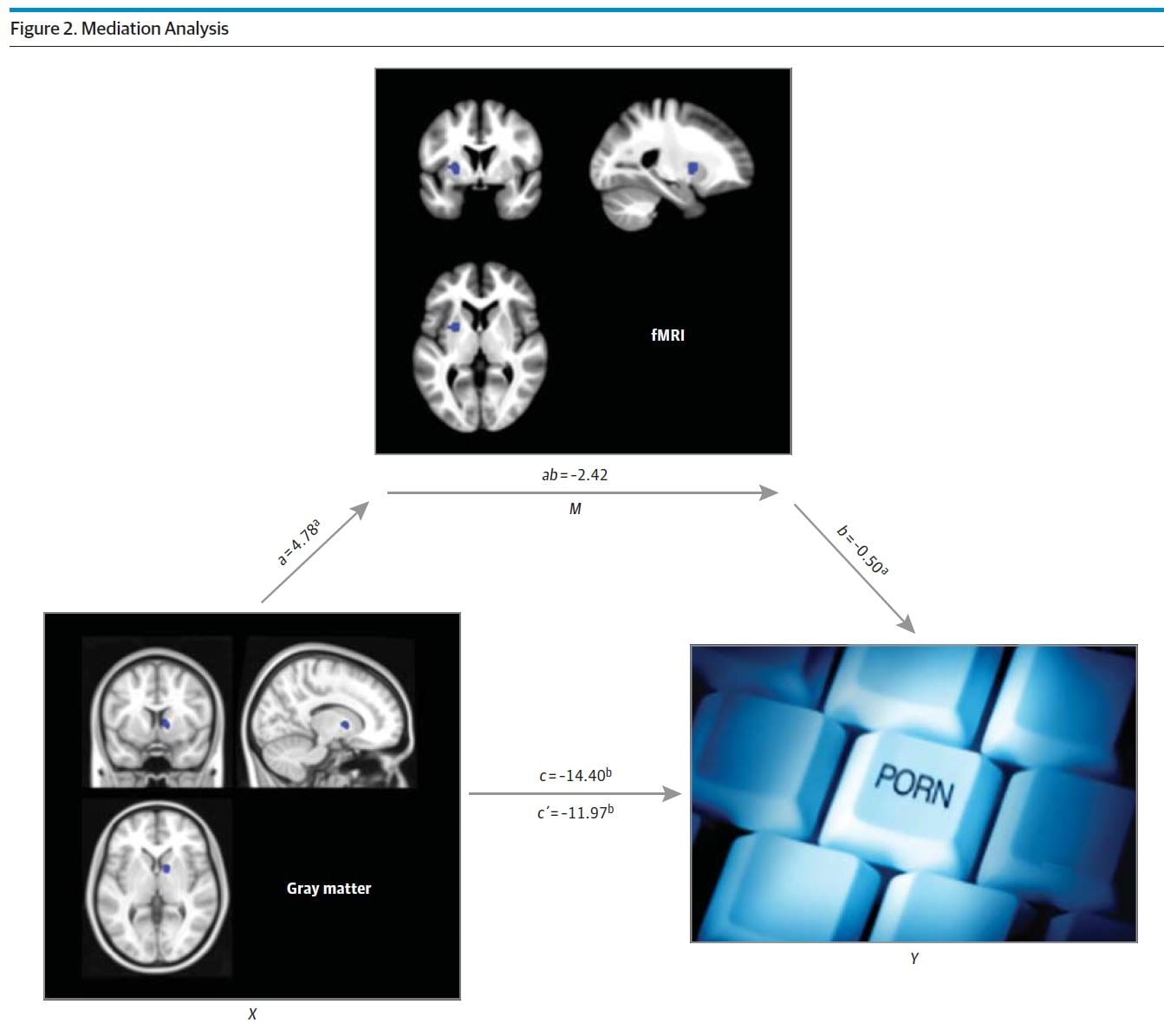 advances in addiction neuroscience. Here’s an excellent peer-reviewed journal article of where addiction neuroscience is with respect to porn addiction: Pornography addiction – a supranormal stimulus considered in the context of neuroplasticity (2013). Numerous brain studies on porn users have been published since this “start here” article first appeared in January, 2011. They lend support to the porn addiction model:
- Preliminary investigation of the impulsive and neuroanatomical characteristics of compulsive sexual behavior (2009)
- Self-reported differences on measures of executive function and hypersexual behavior in a patient and community sample of men (2010)
- Watching Pornographic Pictures on the Internet: Role of Sexual Arousal Ratings and Psychological-Psychiatric Symptoms for Using Internet Sex Sites Excessively (2011)
- Sexual Desire, not Hypersexuality, is Related to Neurophysiological Responses Elicited by Sexual Images (2013)
- Pornographic picture processing interferes with working memory performance (2013)
- Sexual Picture Processing Interferes with Decision-Making Under Ambiguity (2013)
- Cybersex addiction: Experienced sexual arousal when watching pornography and not real-life sexual contacts makes the difference (2013)
- Brain Structure and Functional Connectivity Associated With Pornography Consumption: The Brain on Porn (2014)
- Neural Correlates of Sexual Cue Reactivity in Individuals with and without Compulsive Sexual Behaviours (2014)
- Empirical Evidence and Theoretical Considerations on Factors Contributing to Cybersex Addiction From a Cognitive-Behavioral View (2014)
- Cybersex addiction in heterosexual female users of internet pornography can be explained by gratification hypothesis (2014)
- Enhanced Attentional Bias towards Sexually Explicit Cues in Individuals with and without Compulsive Sexual Behaviours (2014)
2015 papers
- Novelty, Conditioning and Attentional Bias to Sexual Rewards (2015)
- Neural Substrates of Sexual Desire in Individuals with Problematic Hypersexual Behavior (2015)
- Modulation of Late Positive Potentials by Sexual Images in Problem Users and Controls Inconsistent with “Porn Addiction” (2015)
- HPA axis dysregulation in men with hypersexual disorder (2015)
- Prefrontal control and internet addiction: a theoretical model and review of neuropsychological and neuroimaging findings (2015)
- Implicit associations in cybersex addiction: Adaption of an Implicit Association Test with pornographic pictures. (2015)
- Symptoms of cybersex addiction can be linked to both approaching and avoiding pornographic stimuli: results from an analog sample of regular cybersex users (2015)
- Getting stuck with pornography? Overuse or neglect of cybersex cues in a multitasking situation is related to symptoms of cybersex addiction (2015)
- Trading Later Rewards for Current Pleasure: Pornography Consumption and Delay Discounting (2015)
- Sexual Excitability and Dysfunctional Coping Determine Cybersex Addiction in Homosexual Males (2015)
2016 papers
- The Role of Neuroinflammation in the Pathophysiology of Hypersexual Disorder (2016)
- Compulsive sexual behavior: Prefrontal and limbic volume and interactions (2016)
- Ventral striatum activity when watching preferred pornographic pictures is correlated with symptoms of Internet pornography addiction (2016)
- Altered Appetitive Conditioning and Neural Connectivity in Subjects With Compulsive Sexual Behavior (2016)
- Compulsivity across the pathological misuse of drug and non-drug rewards (2016)
- Subjective Craving for Pornography and Associative Learning Predict Tendencies Towards Cybersex Addiction in a Sample of Regular Cybersex Users (2016)
- Exploring the Relationship between Sexual Compulsivity and Attentional Bias to Sex-Related Words in a Cohort of Sexually Active Individuals (2016)
- Mood changes after watching pornography on the Internet are linked to symptoms of Internet-pornography-viewing disorder (2016)
- Problematic sexual behavior in young adults: Associations across clinical, behavioral, and neurocognitive variables (2016)
2017 papers
- Methylation of HPA Axis Related Genes in Men With Hypersexual Disorder (2017)
- Can Pornography be Addictive? An fMRI Study of Men Seeking Treatment for Problematic Pornography Use (2017)
- Executive Functioning of Sexually Compulsive and Non-Sexually Compulsive Men Before and After Watching an Erotic Video (2017)
- Conscious and Non-Conscious Measures of Emotion: Do They Vary with Frequency of Pornography Use? (2017)
- Exposure to Sexual Stimuli Induces Greater Discounting Leading to Increased Involvement in Cyber Delinquency Among Men (2017)
- Predictors for (Problematic) Use of Internet Sexually Explicit Material: Role of Trait Sexual Motivation and Implicit Approach Tendencies Towards Sexually Explicit Material (2017)
2018 papers
- Pornography Addiction Detection based on Neurophysiological Computational Approach (2018)
- Gray matter deficits and altered resting-state connectivity in the superior temporal gyrus among individuals with problematic hypersexual behavior (2018)
- Tendencies toward Internet-pornography-use disorder: Differences in men and women regarding attentional biases to pornographic stimuli (2018)
- Altered Prefrontal and Inferior Parietal Activity During a Stroop Task in Individuals With Problematic Hypersexual Behavior (2018)
- Trait and state impulsivity in males with tendency towards Internet-pornography-use disorder (2018)
2019 papers
- Facets of impulsivity and related aspects differentiate among recreational and unregulated use of Internet pornography (2019)
- Approach bias for erotic stimuli in heterosexual male college students who use pornography (2019)
- Hypermethylation-associated downregulation of microRNA-4456 in hypersexual disorder with putative influence on oxytocin signalling: A DNA methylation analysis of miRNA genes (2019)
2020 papers
- Gray matter volume differences in impulse control and addictive disorders (2020)
- High Plasma Oxytocin Levels in Men With Hypersexual Disorder (2020)
- Normal Testosterone but Higher Luteinizing Hormone Plasma Levels in Men With Hypersexual Disorder (2020)
- Approach bias for erotic stimuli among heterosexual female college students who use pornography (2020)
- Inhibitory control and problematic Internet-pornography use – The important balancing role of the insula (2020)
- Sexual cues alter working memory performance and brain processing in men with compulsive sexual behavior (2020)
- Subjective reward value of visual sexual stimuli is coded in human striatum and orbitofrontal cortex (2020)
- The Neurosciences of Health Communication: An fNIRS Analysis of Prefrontal Cortex and Porn Consumption in Young Women for the Development of Prevention Health Programs (2020)
- Event-related potentials in a two-choice oddball task of impaired behavioral inhibitory control among males with tendencies towards cybersex addiction (2020)
2021 papers
2022 papers
Support for YBOP hypotheses
The above studies provide very strong support for hypotheses put forth by YBOP in 2011. Their findings include: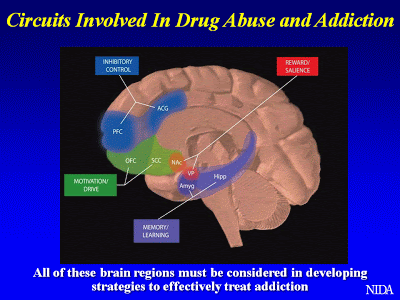
- The 3 major addiction-related brain changes: sensitization, desensitization, and hypofrontality.
- More porn use correlated with less grey matter in the reward circuit (dorsal striatum).
- Greater porn use correlated with less reward circuit activation when briefly viewing sexual images.
- More porn use correlated with disrupted neural connections between the reward circuit and prefrontal cortex.
- Addicts had greater prefrontal activity to sexual cues, but less brain activity to normal stimuli (matches drug addiction).
- Porn use/exposure to porn related to greater delayed discounting (inability to delay gratification). This is a sign of poorer executive functioning.
- 60% of compulsive porn addicted subjects in one study experienced ED or low libido with partners, but not with porn. All stated that internet porn use caused their ED/low libido.
- Enhanced attentional bias comparable to drug users. Indicates sensitization (a product of DeltaFosb).
- Greater wanting & craving for porn, but not greater liking. This aligns with the accepted model of addiction – incentive sensitization.
- Porn addicts have greater preference for sexual novelty yet their brains habituated faster to sexual images. Not pre-existing.
- The younger the porn users the greater the cue-induced reactivity in the reward center.
- Higher EEG (P300) readings when porn users were exposed to porn cues (which occurs in other addictions).
- Less desire for sex with a person correlating with greater cue-reactivity to porn images.
- More porn use correlated with lower LPP amplitude when briefly viewing sexual photos: indicates habituation or desensitization.
- Dysfunctional HPA axis and altered brain stress circuits, which occurs in drug addictions. The same applies to greater amygdala volume, which is associated with chronic social stress).
- Epigenetic changes on genes central to the human stress response and closely associated with addiction.
- Higher levels of Tumor Necrosis Factor (TNF) – which also occurs in drug abuse and addiction.
- A deficit in temporal cortex gray matter; poorer connectivity between temporal corporate and several other regions.
- Greater state impulsivity.
- Decreased prefrontal cortex and anterior cingulate gyrus gray matter compared to healthy controls.
- Reductions in white matter compared to healthy controls.
A 2016 peer-reviewed paper by Gary Wilson: Eliminate Chronic Internet Pornography Use to Reveal Its Effects (2016)
Summarizing the current state of the neuroscience:
For political reasons, brain research isolating internet porn addicts from plain old Internet addicts has been very slow in arriving. In addition to the above brain studies on porn users, over 380 brain studies on Internet addicts have been published, and all have reported the same fundamental brain changes as seen in drug addicts. The studies did not assess what percentage of research subjects were addicted to internet porn. However, it would be illogical to conclude that high levels of internet porn use cannot change the brain, when junk food, video games, gambling, and “the Internet” have already been proven to do so.
While slow to arrive, every single neuroscience based study published (or in the press) on internet porn users or “sex addicts” supports the premise that internet porn use can cause addiction-related brain changes. So do recent neuroscience-based reviews of the literature:
Sex Addiction as a Disease: Evidence for Assessment, Diagnosis, and Response to Critics (2015)
This provides a chart that takes on specific criticisms and offers citations that counter them.
Neuroscience of Internet Pornography Addiction: A Review and Update (2015)
This gives a thorough review of the neuroscience literature related to Internet addiction subtypes, with special focus on internet porn addiction, see – The review also critiques two recent headline-grabbing EEG studies which purport to have “debunked” porn addiction.
Cybersex Addiction (2015)
Excerpts: In recent articles, cybersex addiction is considered a specific type of Internet addiction. Some current studies investigated parallels between cybersex addiction and other behavioral addictions, such as Internet Gaming Disorder. Cue-reactivity and craving are considered to play a major role in cybersex addiction. Neuroimaging studies support the assumption of meaningful commonalities between cybersex addiction and other behavioral addictions as well as substance dependency.
Neurobiology of Compulsive Sexual Behavior: Emerging Science (2016)
Excerpt: “Given some similarities between CSB and drug addictions, interventions effective for addictions may hold promise for CSB, thus providing insight into future research directions to investigate this possibility directly.”
Should Compulsive Sexual Behavior be Considered an Addiction? (2016)
Excerpt: “Overlapping features exist between CSB and substance use disorders. Common neurotransmitter systems may contribute to CSB and substance use disorders, and recent neuroimaging studies highlight similarities relating to craving and attentional biases. Similar pharmacological and psychotherapeutic treatments may be applicable to CSB and substance addictions”
Compulsive Sexual Behaviour as a Behavioural Addiction: The Impact of the Internet and Other Issues (2016)
Excerpts: “more emphasis is needed on the characteristics of the internet as these may facilitate problematic sexual behaviour.” and “clinical evidence from those who help and treat such individuals should be given greater credence by the psychiatric community.”
Neurobiological Basis of Hypersexuality (2016)
Excerpt: “Taken together, the evidence seems to imply that alterations in the frontal lobe, amygdala, hippocampus, hypothalamus, septum, and brain regions that process reward play a prominent role in the emergence of hypersexuality. Genetic studies and neuropharmacological treatment approaches point at an involvement of the dopaminergic system.”
Cybersex Addiction (2015)
Excerpts: “In recent articles, cybersex addiction is considered a specific type of Internet addiction. Some current studies investigated parallels between cybersex addiction and other behavioral addictions, such as Internet Gaming Disorder. Cue-reactivity and craving are considered to play a major role in cybersex addiction. Neuroimaging studies support the assumption of meaningful commonalities between cybersex addiction and other behavioral addictions as well as substance dependency.”
Searching for clarity in muddy water: future considerations for classifying compulsive sexual behavior as an addiction (2016)
Excerpts: We recently considered evidence for classifying compulsive sexual behavior (CSB) as a non-substance (behavioral) addiction. Our review found that CSB shared clinical, neurobiological and phenomenological parallels with substance-use disorders. Although the American Psychiatric Association rejected hypersexual disorder from DSM-5, a diagnosis of CSB (excessive sex drive) can be made using ICD-10. CSB is also being considered by ICD-11.
Is Internet Pornography Causing Sexual Dysfunctions? A Review with Clinical Reports (2016)
An extensive review of the literature related to porn-induced sexual problems. Involving US Navy doctors, the review provides the latest data revealing a tremendous rise in youthful sexual problems. It also reviews the neurological studies related to porn addiction and sexual conditioning via Internet porn. The doctors provide 3 clinical reports of men who developed porn-induced sexual dysfunctions.
Integrating psychological and neurobiological considerations regarding the development and maintenance of specific Internet-use disorders: An Interaction of Person-Affect-Cognition-Execution model (2016)
A review of the mechanisms underlying the development and maintenance of specific Internet-use disorders, including “Internet-pornography-viewing disorder”. The authors suggest that pornography addiction (and cybersex addiction) be classified as internet use disorders and placed with other behavioral addictions under substance-use disorders as addictive behaviors.
Sexual Addiction chapter from Neurobiology of Addictions, Oxford Press (2016)
Excerpt: We review the neurobiological basis for addiction, including natural or process addiction, and then discuss how this relates to our current understanding of sexuality as a natural reward that can become functionally “unmanageable” in an individual’s life.
Neuroscientific Approaches to Online Pornography Addiction (2017)
Excerpt: In the last two decades, several studies with neuroscientific approaches, especially functional magnetic resonance imaging (fMRI), were conducted to explore the neural correlates of watching pornography under experimental conditions and the neural correlates of excessive pornography use. Given previous results, excessive pornography consumption can be connected to already known neurobiological mechanisms underlying the development of substance-related addictions.
Is excessive sexual behaviour an addictive disorder? (2017)
Excerpts: Research into the neurobiology of compulsive sexual behaviour disorder has generated findings relating to attentional biases, incentive salience attributions, and brain-based cue reactivity that suggest substantial similarities with addictions. We believe that classification of compulsive sexual behaviour disorder as an addictive disorder is consistent with recent data and might benefit clinicians, researchers, and individuals suffering from and personally affected by this disorder.
The Proof of the Pudding Is in the Tasting: Data Are Needed to Test Models and Hypotheses Related to Compulsive Sexual Behaviors (2018)
Excerpts: Among the domains that may suggest similarities between CSB and addictive disorders are neuroimaging studies, with several recent studies omitted by Walton et al. (2017). Initial studies often examined CSB with respect to models of addiction (reviewed in Gola, Wordecha, Marchewka, & Sescousse, 2016b; Kraus, Voon, & Potenza, 2016b).
Promoting educational, classification, treatment, and policy initiatives Commentary on: Compulsive sexual behaviour disorder in the ICD-11 (Kraus et al., 2018)
Excerpts: The current proposal of classifying CSB disorder as an impulse-control disorder is controversial as alternate models have been proposed (Kor, Fogel, Reid, & Potenza, 2013). There are data suggesting that CSB shares many features with addictions (Kraus et al., 2016), including recent data indicating increased reactivity of reward-related brain regions in response to cues associated with erotic stimuli (Brand, Snagowski, Laier, & Maderwald, 2016; Gola, Wordecha, Marchewka, & Sescousse, 2016; Gola et al., 2017; Klucken, Wehrum-Osinsky, Schweckendiek, Kruse, & Stark, 2016; Voon et al., 2014.
Compulsive Sexual Behavior in Humans and Preclinical Models (2018)
Excerpts: Compulsive sexual behavior (CSB) is widely regarded as a “behavioral addiction,” and is a major threat to quality of life and both physical and mental health. In conclusion, this review summarized the behavioral and neuroimaging studies on human CSB and comorbidity with other disorders, including substance abuse. Together, these studies indicate that CSB is associated with functional alterations in dorsal anterior cingulate and prefrontal cortex, amygdala, striatum, and thalamus, in addition to decreased connectivity between amygdala and prefrontal cortex.
Neurocognitive mechanisms in compulsive sexual behavior disorder (2018)
Excerpt: To date, most neuroimaging research on compulsive sexual behavior has provided evidence of overlapping mechanisms underlying compulsive sexual behavior and non-sexual addictions. Compulsive sexual behavior is associated with altered functioning in brain regions and networks implicated in sensitization, habituation, impulse dyscontrol, and reward processing in patterns like substance, gambling, and gaming addictions. Key brain regions linked to CSB features include the frontal and temporal cortices, amygdala, and striatum, including the nucleus accumbens.
A Current Understanding of the Behavioral Neuroscience of Compulsive Sexual Behavior Disorder and Problematic Pornography Use
Excerpt: Recent neurobiological studies have revealed that compulsive sexual behaviors are associated with altered processing of sexual material and differences in brain structure and function. Although few neurobiological studies of CSBD have been conducted to date, existing data suggest neurobiological abnormalities share communalities with other additions such as substance use and gambling disorders. Thus, existing data suggest that its classification may be better suited as a behavioral addiction rather than an impulse-control disorder.
Ventral Striatal Reactivity in Compulsive Sexual Behaviors (2018)
Excerpt: Among currently available studies, we were able to find nine publications (Table 1) which utilized functional magnetic resonance imaging. Only four of these (36–39) directly investigated processing of erotic cues and/or rewards and reported findings related to ventral striatum activations. Three studies indicate increased ventral striatal reactivity for erotic stimuli (36–39) or cues predicting such stimuli (36–39). These findings are consistent with Incentive Salience Theory (IST) (28), one of the most prominent frameworks describing brain functioning in addiction.
Online Porn Addiction: What We Know and What We Don’t—A Systematic Review (2019)
Excerpt: As far as we know, a number of recent studies support this entity as an addiction with important clinical manifestations such as sexual dysfunction and psychosexual dissatisfaction. Most of the existing work is based off on similar research done on substance addicts, based on the hypothesis of online pornography as a ‘supranormal stimulus’ akin to an actual substance that, through continued consumption, can spark an addictive disorder.
Occurrence and development of online porn addiction: individual susceptibility factors, strengthening mechanisms and neural mechanisms (2019)
Excerpt: The long-term experience of online pornography has led to the sensitization of such people to online pornography-related clues, which has led to a growing sense of craving, compulsive use of online pornography under the dual factors of temptation and functional impairment. The sense of satisfaction gained from it is getting weaker and weaker, so more and more online pornography is needed to maintain the previous emotional state and become addicted.
Theories, prevention, and treatment of pornography-use disorder (2019)
Excerpt: Compulsive sexual behavior disorder, including problematic pornography use, has been included in the ICD-11 as impulse control disorder. The diagnostic criteria for this disorder, however, are very similar to the criteria for disorders due to addictive behaviors… Theoretical considerations and empirical evidence suggest that the psychological and neurobiological mechanisms involved in addictive disorders are also valid for pornography-use disorder.
Cybersex addiction: an overview of the development and treatment of a newly emerging disorder (2020)
Excerpts: Cybersex addiction is a non-substance related addiction that involves online sexual activity on the internet. Nowadays, various kinds of things related to sex or pornography are easily accessible through internet media. In Indonesia, sexuality is usually assumed taboo but most young people have been exposed to pornography. It can lead to an addiction with many negative effects on users, such as relationships, money, and psychiatric problems like major depression and anxiety disorders.
Which Conditions Should Be Considered as Disorders in the International Classification of Diseases (ICD-11) Designation of “Other Specified Disorders Due to Addictive Behaviors”? (2020)
Excerpts: Data from self-report, behavioral, electrophysiological, and neuroimaging studies demonstrate an involvement of psychological processes and underlying neural correlates that have been investigated and established to varying degrees for substance-use disorders and gambling/gaming disorders (criterion 3). Commonalities noted in prior studies include cue-reactivity and craving accompanied by increased activity in reward-related brain areas, attentional biases, disadvantageous decision-making, and (stimuli-specific) inhibitory control.
The Addictive Nature of Compulsive Sexual Behaviours and Problematic Online Pornography Consumption: A Review (2020)
Excerpts: Available findings suggest that there are several features of CSBD and POPU that are consistent with characteristics of addiction, and that interventions helpful in targeting behavioural and substance addictions warrant consideration for adaptation and use in supporting individuals with CSBD and POPU…. The neurobiology of POPU and CSBD involves a number of shared neuroanatomical correlates with established substance use disorders, similar neuropsychological mechanisms, as well as common neurophysiological alterations in the dopamine reward system.
Dysfunctional sexual behaviors: definition, clinical contexts, neurobiological profiles and treatments (2020)
Excerpts: Porn addiction, although distinct neurobiologically from sexual addiction, is still a form of behavioral addiction….The sudden suspension of porn addiction causes negative effects in mood, excitement, and relational and sexual satisfaction….The massive use of pornography facilitates the onset of psychosocial disorders and relationship difficulties…
What should be included in the criteria for compulsive sexual behavior disorder? (2020)
Excerpts: The classification of CSBD as an impulse control disorder also warrants consideration. … Additional research may help refine the most appropriate classification of CSBD as happened with gambling disorder, reclassified from the category of impulse control disorders to non-substance or behavioral addictions in DSM-5 and ICD-11. … impulsivity may not contribute as strongly to problematic pornography use as some have proposed (Bőthe et al., 2019).
Decision-Making in Gambling Disorder, Problematic Pornography Use, and Binge-Eating Disorder: Similarities and Differences (2021)
Excerpts: Similarities between CSBD and addictions have been described, and impaired control, persistent use despite adverse consequences, and tendencies to engage in risky decisions may be shared features (37••, 40). Individuals with these disorders often show impaired cognitive control and disadvantageous decision-making [12, 15,16,17]. Deficits in decision-making processes and goal-directed learning have been found across multiple disorders.
Cognitive processes related to problematic pornography use (PPU): A systematic review of experimental studies (2021)
Excerpts: In the current paper, we review and compile the evidence derived from 21 studies investigating the cognitive processes underlying PPU. In brief, PPU is related to: (a) attentional biases toward sexual stimuli, (b) deficient inhibitory control (in particular, to problems with motor response inhibition and to shift attention away from irrelevant stimuli), (c) worse performance in tasks assessing working memory, and (d) decision making impairments.
Cumulative research
The above studies, reviews and commentaries are supported by decades of extensive addiction research which has found:
- That both behavioral and chemical addictions share the same fundamental brain changes and mechanisms.
- That when animals and humans exhibit the signs, behaviors and symptoms of an addiction, corresponding brain changes are also present.
- Addiction-related brain changes (both behavioral and chemical) are triggered by accumulation of DeltaFosB.
- That all brain research done thus far on Internet addiction (some of which includes porn use) reveals the same kinds of brain changes as seen in drug addicts.
- That Internet addiction and porn use studies have demonstrated causation of various symptoms and brain changes.
- There is sufficient empirical support for an official diagnosis as ICD-11 contains a new diagnosis suitable for both porn and sex addiction: “Compulsive Sexual Behavior Disorder.”
Finally, over 110 studies have reported links between porn use or porn addiction and sexual dysfunctions, lower arousal, and poorer sexual & relationship satisfaction. Over 60 studies reporting findings consistent with escalation of porn use (tolerance), habituation to porn, and even withdrawal symptoms (all signs and symptoms associated with addiction). And over 90 studies link porn use to poorer mental-emotional health & poorer cognitive outcomes.
What about studies that falsify porn addiction? (the “porn wars”)
There are none, including this “letter to the editor” in an academic journal. Perhaps you have read articles describing studies that claim to falsify porn addiction. Look past the headline and I guarantee you will find one of these three papers, and two agenda-driven PhDs:
- Sexual Desire, not Hypersexuality, is Related to Neurophysiological Responses Elicited by Sexual Images (2013)
- Modulation of Late Positive Potentials by Sexual Images in Problem Users and Controls Inconsistent with “Porn Addiction” (2015)
- The Emperor Has No Clothes: A Review of the ‘Pornography Addiction’ Model (2014)
Nicole Prause is the lead author on studies 1 and 2, and is the second author on paper #3. Contrary to the authors’ claims, studies one and two actually lend support to the porn addiction model. This page contains the YBOP analysis along with six peer-reviewed critiques of study #1. This page contains the YBOP analysis along with seven peer-reviewed analysis of study #2. All of the peer-reviewed analysis are in agreement with the YBOP critiques. In this 2018 presentation Gary Wilson exposes the truth behind 5 questionable and misleading studies. They included the two Nicole Prause EEG studies (Steele et al., 2013 and Prause et al., 2015): Porn Research: Fact or Fiction?
Nicole Prause

What’s going on here? Nicole Prause is a former academic with a long history of harassing authors, researchers, therapists, reporters and others who dare to report evidence of harms from internet porn use. She appears to be quite cozy with the pornography industry, as can be seen from this image of her (far right) on the red carpet of the X-Rated Critics Organization (XRCO) awards ceremony. (According to Wikipedia, “The XRCO Awards are given by the American X-Rated Critics Organization annually to people working in adult entertainment and it is the only adult industry awards show reserved exclusively for industry members.[1]“).
It also appears that Prause may have obtained porn performers as subjects through another porn industry interest group, the Free Speech Coalition (for more see: Is Nicole Prause Influenced by the Porn Industry?). The FSC-obtained subjects were allegedly used in her hired-gun study on the heavily tainted and very commercial “Orgasmic Meditation” scheme (now being investigated by the FBI).
Nicole Prause, by her own admission, vehemently rejects the concept of porn addiction. For example, a quote from a Martin Daubney article about sex/porn addictions:
Dr Nicole Prause, principal investigator at the Sexual Psychophysiology and Affective Neuroscience (Span) Laboratory in Los Angeles, calls herself a “professional debunker” of sex addiction.
Nicole Prause on Twitter
In addition, Nicole Prause’s former Twitter slogan reveals that she lacks the impartiality required for scientific research:
“Studying why people choose to engage in sexual behaviors without invoking addiction nonsense“
In October, 2015 Prause’s original Twitter account is permanently suspended for harassment. That didn’t slow her down. In blatant support for the porn industry, Prause then created at least two websites with twitter accounts: (1) 2016 – PornHelps,” which had its own Twitter account (@pornhelps), (2) 2019 – RealYBOP Twitter and RealYBOP website.
It should be noted that Nicole Prause offered (for a fee) her “expert” testimony against “sex addiction”.

It seems as though Prause has been selling her services to profit from the claimed anti-porn addiction conclusions of her two EEG studies (1, 2), even though numerous peer-reviewed critiques say both studies support the addiction model (Steele et al., 2013: 1, 2, 3, 4, 5, 6, 7, 8. Prause et al., 2015: 1, 2, 3, 4. 5, 6, 7, 8, 9, 10.).
Nicole Prause and David Ley collaborate
As for the third paper (Ley et al., 2014) it’s not a study. Instead, it claims to be a “review of the literature” on porn addiction and porn’s effects. Nothing could be farther from the truth. The lead author, David Ley, is the author of The Myth of Sex Addiction. Nicole Prause is the second author. Ley & Prause not only teamed up to write paper #3, they also teamed up to write a Psychology Today blog post about paper #1. The blog post appeared 5 months before Prause’s paper was formally published (so no one could refute it). You may have seen Ley’s blog post with the oh-so-catchy title: “Your Brain on Porn – It’s NOT Addictive.” Read more about Ley and Prause and their collaborations here.
The following is a very long analysis of paper #3, which goes line-by-line, showing all the shenanigans Ley & Prause incorporated in their “review”: The Emperor Has No Clothes: A Fractured Fairytale Posing As A Review. It completely dismantles the so-called review, and documents dozens of misrepresentations of the research they cited. The most shocking aspect of the Ley review is that it omitted any study that reported negative effects related to porn use or found porn addiction! Yes, you read that right.
While purporting to write an “objective” review, these two sexologists justified omitting hundreds of studies. They left them out on the grounds that these were correlational studies. Guess what? Virtually all studies on porn are correlational. There are, and pretty much will be, only correlational studies. Researchers have no way to find “porn virgins” or to keep subjects off of porn for extended periods in order compare effects. Thousands of guys are quitting porn voluntarily on various forums, however. Their results suggest that removing internet porn is the key variable in their symptoms and recoveries.
Numerous conflicts of interest (including collaborating with xHamster)
David Ley religiously denies both sex and porn addiction. He has written 30 or so blog posts attacking porn-recovery forums, and dismissing porn addiction and porn-induced ED. In a blatant financial conflict of interest, David Ley is being compensated by porn industry giant X-hamster to promote their websites and to convince users that porn addiction and sex addiction are myths! Specifically, David Ley and the newly formed Sexual Health Alliance (SHA) have partnered with a X-Hamster website (Strip-Chat). See “Stripchat aligns with Sexual Health Alliance to stroke your anxious porn-centric brain“:
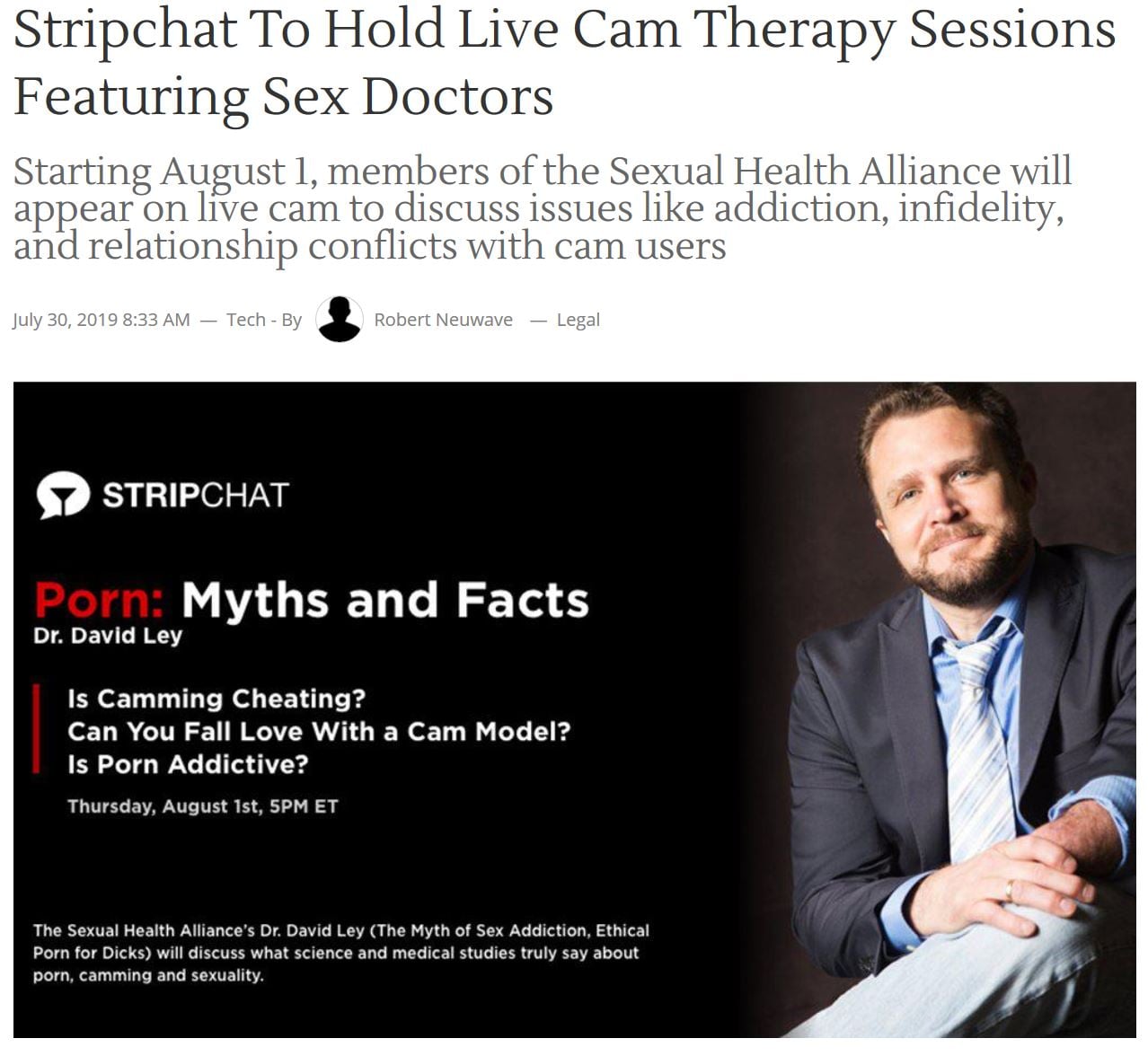
Paid porn industry consultant
The fledgling Sexual Health Alliance (SHA) advisory board includes David Ley and two other RealYourBrainOnPorn.com “experts” (Justin Lehmiller & Chris Donahue). RealYBOP is a group of openly pro-porn, self-proclaimed “experts” headed by Nicole Prause. This group is currently engaged in illegal trademark infringement and squatting directed toward the legitimate YBOP. Put simply, those trying to silence YBOP are also being paid by the porn industry to promote its/their businesses, and assure users that porn and cam sites cause no problems (note: Nicole Prause has close, public ties to the porn industry as thoroughly documented on this page).
In this article, Ley dismisses his compensated promotion of the porn industry:
Granted, sexual health professionals partnering directly with commercial porn platforms face some potential downsides, particularly for those who’d like to present themselves as completely unbiased. “I fully anticipate [anti-porn advocates] to all scream, ‘Oh, look, see, David Ley is working for porn,’” says Ley, whose name is routinely mentioned with disdain in anti-masturbation communities like NoFap.
But even if his work with Stripchat will undoubtedly provide fodder to anyone eager to write him off as biased or in the pocket of the porn lobby, for Ley, that tradeoff is worth it. “If we want to help [anxious porn consumers], we have to go to them,” he says. “And this is how we do that.”
Biased? Ley reminds us of the infamous tobacco doctors, and the Sexual health Alliance, the Tobacco Institute.
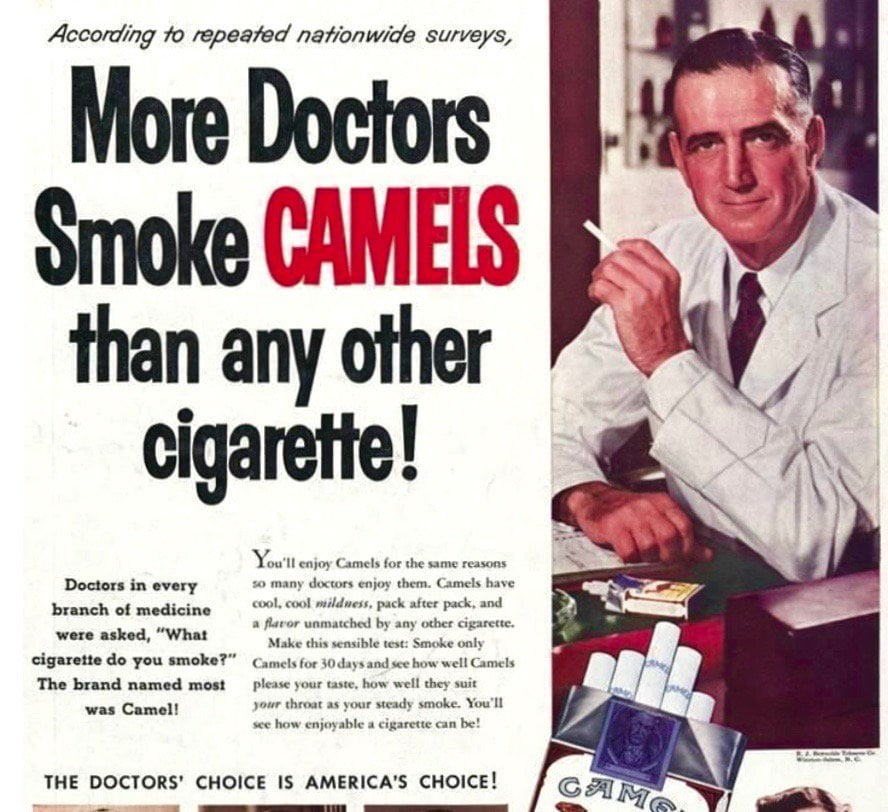
Paid to debunk porn and sex addiction
In addition, David Ley is being paid to debunk porn and sex addiction. At the end of this Psychology Today blog post Ley states:
“Disclosure: David Ley has provided testimony in legal cases involving claims of sex addiction.”
In 2019 David Ley’s new website offered his well-compensated “debunking” services:
David J. Ley, Ph.D., is a clinical psychologist and AASECT-certified supervisor of sex therapy, based in Albuquerque, NM. He has provided expert witness and forensic testimony in a number of cases around the United States. Dr. Ley is regarded as an expert in debunking claims of sexual addiction. He has been certified as an expert witness on this topic. He has testified in state and federal courts.
Contact him to obtain his fee schedule and arrange an appointment to discuss your interest.
Pornhub and David Ley
Ley also profits from selling two books that deny sex and porn addiction. They are “The Myth of Sex Addiction,” (2012) and “Ethical Porn for Dicks,” (2016). Pornhub, owned by porn giant MindGeek is one of the five back-cover endorsements listed for Ley’s 2016 book:
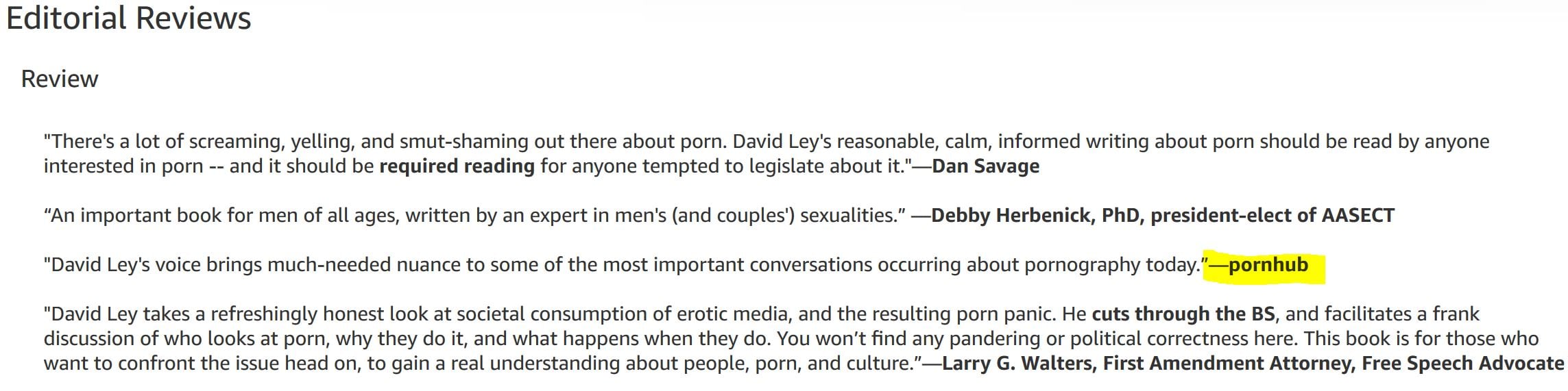
Note: PornHub was the second Twitter account to retweet RealYBOP’s initial tweet announcing its “expert” website, suggesting a coordinated effort between PornHub and the RealYBOP experts. Wow!
Finally, David Ley makes money via CEU seminars, where he promotes the addiction-deniers’ ideology set forth in his two books (which recklessly ignores hundreds of studies and the significance of the new Compulsive Sexual Behavior Disorder diagnosis in the World Health Organization’s diagnostic manual). Ley is compensated for his many talks featuring his biased views of porn. In this 2019 presentation Ley appears to support and promote adolescent porn use: Developing Positive Sexuality and Responsible Pornography Use in Adolescents.
The above is just the tip of the Prause and Ley iceberg. Court rulings fully exposed Nicole Prause as the perpetrator, not the victim.
For quick refutation of the naysayers’ pseudoscience watch Gabe Deem’s video: PORN MYTHS – The Truth Behind Addiction And Sexual Dysfunctions.
Internet porn addiction is not sex addiction
Sex addiction requires real people; porn addiction requires a screen and an Internet connection. The majority of guys we see started on internet porn long before any sexual contact. They are young guys who rewired their adolescent sexuality to clicking, searching, voyeurism, multiple tabs, HD streaming hardcore. This was long before their first kiss. Does this sound like a Tiger Woods-esque addiction? No.
Any debates on porn addiction should therefore exclude all mention of sex addiction. It should not be about how “normal male behavior” is being pathologized. When did normal sexual behavior evolve into staring at a screen? When did it become masturbating with your non-dominant hand while clicking through scene after scene, searching for “the one” to finish off? Watch a great talk given at the 2015 Society for the Advancement of Sexual Health (SASH) annual conference: Porn Addiction Is NOT Sex Addiction.
Can masturbation play a role in this addiction?
Of course, but masturbation is not required. That said, frequent ejaculation in animals leads to several brain changes that inhibit dopamine, and thus libido, for several days. Under normal circumstances, sexual satiety (defined differently for each species) leads to males taking a time out from sexual activity. Sexually satiated porn users may override these inhibitory mechanisms by escalating to more extreme porn, or spending more time watching. Both goose dopamine. Pushing past “I’m done” signals can lead to the accumulation of DeltaFosB. Certainly, eating to obesity causes the accumulation of DeltaFosB. However, without the lure of internet porn, how many guys would just give it a rest? Most all. For more, see Does Frequent Ejaculation Cause A Hangover?
Note: Many debates about porn addiction (existence or effects) I’ve seen devolve into debates about masturbation. This is nonsensical and completely muddies the discussion. YBOP is only concerned with internet porn use, not the pros, cons, or frequency of masturbation.
Many symptoms, one cause: Neuroplastic brain changes
 As of 2016, more than a quarter of porn users surveyed are showing signs of problematic porn use. In one study, (27.6%) of a large French-speaking sample self-assessed their consumption of OSAs as problematic. In a Yale study of 1298 men who had viewed pornography in the last 6 months, 28% scored at or above the cutoff for hypersexuality disorder. So, clearly cracks are appearing in today’s porn users. However, people arrive here with lots of different symptoms. They’re not always sure the symptoms are due to their heavy porn use.
The symptoms
Confusion is understandable because the symptoms of excessive porn use look so different:
- Distress about escalation to more extreme porn
- Difficulty maintaining an erection while putting on a condom
- Delayed ejaculation
- Loss of libido
- Copulatory impotence (can get it up for porn, but not partners)
- Frequent masturbation, little satisfaction
- Uncharacteristic, worsening social anxiety or lack of confidence
- Growing erectile dysfunction, even with extreme porn.
- Morphing porn tastes that don’t match sexual orientation (also triggering HOCD)
- Inability to concentrate, extreme restlessness
- Depression, anxiety, brain fog
There’s good reason to believe these symptoms can often arise from addiction-related brain changes. The reward system contains structures that influence emotions, moods, and cognitive function. It also has structures for stress response, the autonomic nervous system, and the endocrine system. For example, many of the above complaints such as social anxiety, depression, low motivation, ED, and concentration problems, have been linked to low dopamine and low or altered D2 receptors. For the neurobiology of the many benefits ex-porn users experience, see Porn, Masturbation and Mojo: A Neuroscience Perspective.
“Rebooting”
If chronic porn use is underlying your symptoms, you need to restore the sensitivity of your reward circuit. You need to weaken sensitized addiction pathways, and strengthen executive control. Men on porn-recovery forums call this process “rebooting.” The best way to reboot is to give your brain a rest from all intense artificial sexual stimulation—including porn, fantasizing about porn, chat rooms, erotic stories, surfing for pictures—until it bounces back to normal responsiveness.
Those addicted to porn often find the rebooting process easier and faster when they drastically reduce or eliminate masturbation. This abstinence from masturbation and orgasm isn’t a lifestyle; it’s a temporary method for deepening recovery and reducing relapses into porn. Obviously, this process is initially very difficult. The brain can no longer rely on the artificially intense “fix” of dopamine (and other neurochemicals) associated with heavy porn use.
In addition to desensitization, porn use strengthens nerve connections linking the short-term relief of internet porn with any trigger your brain associates with porn (sensitization). Triggers such as being home alone, sexy images, or stress and anxiety, can activate your brain’s porn rut. The only way to weaken these subconscious links is to stop using (reinforcing) that brain pathway, and seek your mood medicine elsewhere. Eliminating porn and porn fantasy leads to “un-wiring” and eventual weakening of sensitized pathways and cravings.
Rewiring to real people
The other half of the rewiring process involves spending time with real potential mates. Affectionate contact is healthful for both partners and can help you rewire your arousal to real people. When to have sex? After a time-out (the length of which varies depending upon individual circumstances), some guys find that resuming sexual activity with a real partner is especially helpful, as long as they (and their partners) don’t try to force ejaculation until it happens naturally.
Eliminating porn use often strengthens your executive control, which resides in your prefrontal cortex (behind your forehead). Assessing risk, making long-range plans, and controlling impulses are under the control of the frontal cortex. The term hypofrontality is often used when describing how addictions weaken and inhibit these self-control circuits. It takes time, and consistency, to return these circuits to full working order.
Remember: Your freedom lies in re-balancing your brain. Then you can choose whether you will activate your porn-arousal pathway or some pathway that yields results you prefer. Needless to say, rebooting doesn’t guarantee you can safely use internet porn in the future. The human brain remains vulnerable to a downward spiral from too much of any intense stimulus. Your brain has a sensitized porn pathway, which can always be reactivated.
Many have stopped using porn and recovered their lives. So can you.
For a more in-depth understanding of the science behind internet porn addiction, read these articles in sequence:
- Intoxicating Behaviors: 300 Vaginas = A Lot of Dopamine: We are easily hooked by supernormal versions of natural rewards
- Porn, Novelty and the Coolidge Effect: Without the Coolidge Effect there would be no internet porn
- Porn Then and Now: Welcome to Brain Training: “Are we the first generation to masturbate left-handed?”
- Why Shouldn’t Johnny Watch Porn If He Likes?: Sexual brain training matters—especially during adolescence
- Why Do I Find Porn More Exciting Than A Partner?: Neuroscience reveals how internet porn can trump real sex
- Are Sexual Tastes Immutable?: It’s time to distinguish ‘sexual orientation’ from reversible ‘sexual tastes’
- Can You Trust Your Johnson?: Is internet porn making male sexuality more plastic?
- Recent Internet Addiction Brain Studies Include Porn: Brain research on Internet addiction points in only one direction
- Porn, Pseudoscience and DeltaFosB (2013): Can you spot these 5 familiar myths about porn addiction?
- The Other Porn Experiment: What can informal control groups of former porn users show us?
- Porn, Masturbation and Mojo: A Neuroscience Perspective: Ex-porn users usually get their mojo back. Why?
- Young Porn Users Need Longer To Recover Their Mojo: Is high-speed porn use rewiring adolescent sexuality?
- Porn Addiction is Not Sex Addiction–And Why It Matters
- Toss Your Textbooks: Docs Redefine Sexual Behavior Addictions: American Society of Addiction Medicine releases their sweeping new definition of addiction and FAQ’s.